

Author Ellen Szubski

According to the CDC, nearly 70% of all playground injuries are caused by falls to the ground. This makes the choice and maintenance of surfacing materials one of the most important factors in preventing playground injuries. All playground surfacing material has a Critical Fall Height (CFH) that determines how much impact it can safely absorb. The Critical Fall Height is the safety threshold for playground surfacing and must always be equal to or greater than the surrounding playground equipment’s actual fall height to be considered safe. For example, if the monkey bars have a fall height of 84 inches (7 feet), the surrounding surface material must have a critical fall height of at least 7 feet or taller, meaning that a fall from the monkey bars onto the surrounding surface would likely not result in a serious injury.
There are generally two types of surfacing materials used in public playgrounds: loose-fill materials and unitary surface. Loose-fill materials, such as engineered wood fiber (EWF), shredded rubber mulch, sand, and pea gravel are common options for playground surfacing. Unitary surface materials are held in place by some sort of binder agent. Popular unitary surface materials are Poured-in-Place (PIP) Rubber and rubber tiles.
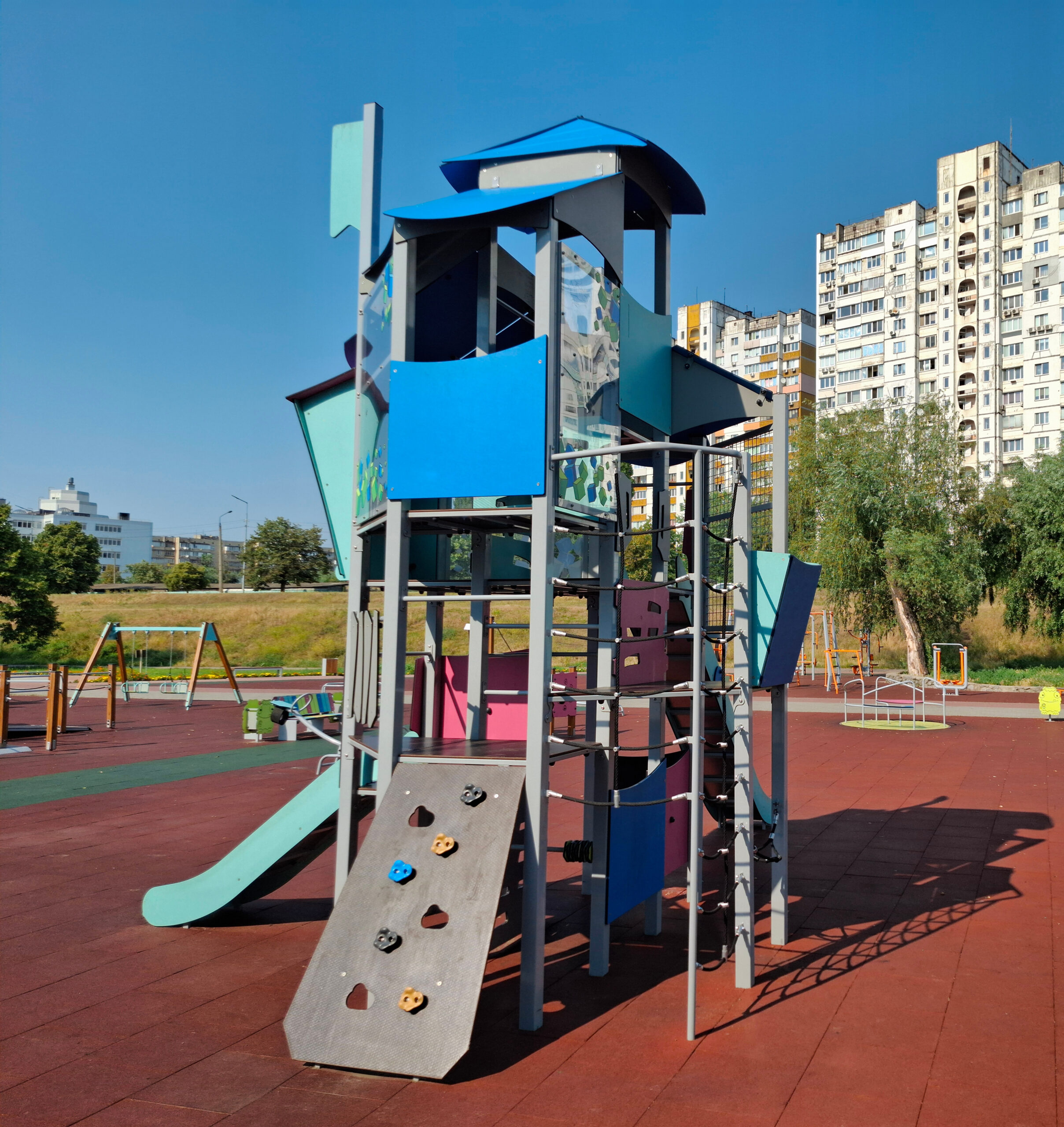
An example of unitary material such as rubber tiles used within a playground.
Both Unitary and loose fill surfacing material require maintenance to fulfill safety requirements. Loose-fill materials like EWF compress up to 25% over time, meaning that if you have a 12-inch layer of mulch, overtime it will compress into a 9-inch layer. In addition to compression, loose fill materials can also be displaced by children and weather. For example, deep pits form at the base of a slide and under swings when children play. When the surface depth is reduced in these areas, the fall protection also significantly drops, further increasing the chances of a serious fall injury. Loose-fill material maintenance should include frequent inspections, raking to relevel highly used areas, refilling/topping off material to ensure a uniform and safe critical fall height. Unitary surfacing materials tend to stay in place, however, they can harden and disintegrate over time with UV rays and weather. Unitary surfacing maintenance should include frequent inspections for cracks, punctures, or buckling that could become tripping hazards. In addition, unitary surfacing must be regularly cleaned and resealed to prevent further UV and weather damage.
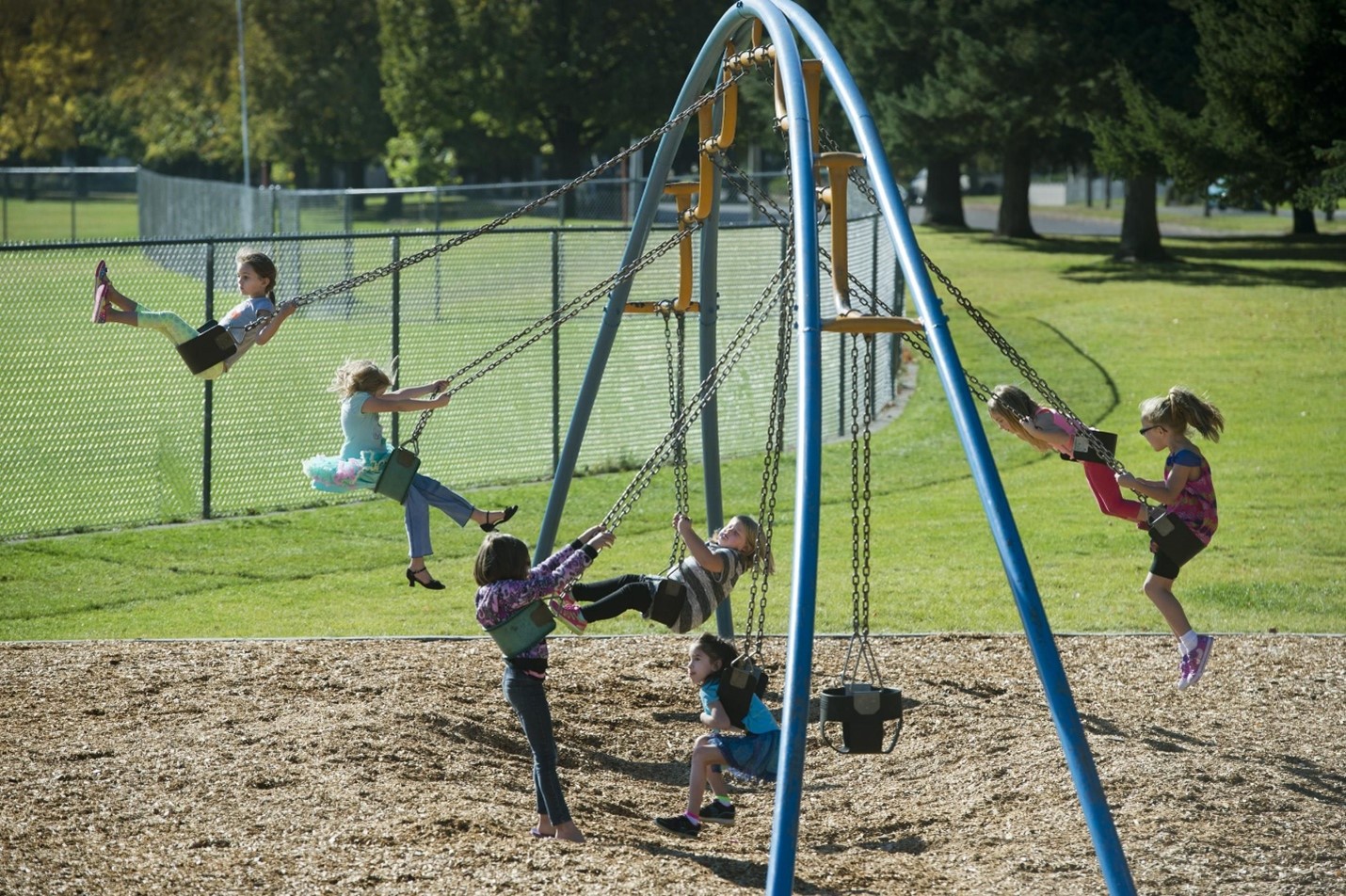
An example of how loose-fill material can be displaced under high use areas such as swing.
A playground without properly maintained surfaces is an injury waiting to happen. The surfacing material surrounding playground equipment should be designed and maintained to absorb the impact energy of the falling child so that it prevents serious injury. Improper maintenance of surfacing, such as displaced loose fill material that is not the appropriate height or disintegrating unitary surfacing material, can lead to serious injuries for children.
Ellen Szubski, Ph.D., CXLT, CPSI, AHFP, is the senior human factors consultant at The Warren Group. She earned a Doctorate of Philosophy in Human Factors Psychology and a Master of Science in Applied Psychology from Clemson University. She did her dissertation on “The Influence of Pedestrian Biological Motion on Time-To-Collision Estimates at Night”. She is also a Certified XL Tribometrist, Certified Playground Safety Inspector and a Certified Associate Human Factors Professional (AHFP). Prior to entering the forensic field, Ellen planned and conducted experiments for a major bicycle manufacturer. She also conducted laser strike perception studies for the Department of Defense. Ellen applies her experience in Human Factors to the analysis of crash investigations and other personal injury matters. These matters often include collisions involving vulnerable road users and drivers, driver distraction, and slips, trips, and falls. She utilizes her knowledge of OSHA regulations, codes, and standards in her analysis of premises liability incidents and safety consulting. Ellen is a current member of the Human Factors and Ergonomics Society (HFES) and it’s Forensic Professional Technical Group.
