Forensic Engineers and Consultants

Blog Posts by: J. Steven Hunt

Author Steve Hunt

Expertise Includes:

  • Construction Falls & Incidents
  • Premises Liability - Pedestrian Falls
  • Safety & Risk Management
  • Codes & Standards Analysis
  • Slip, Trip, and Fall

Preventing Slip-and-Fall Incidents Through Proper Entrance Matting

This article is based on my experience investigating and analyzing slip-and-fall incidents involving pedestrian walking surfaces. One type of slip and fall incident involves slipping on wet floor surfaces shortly after entering a building or stepping onto hard-surface flooring.

Common flooring materials involved include polished concrete, vinyl composite tile, porcelain tile, and wood flooring. These surfaces are generally safe when dry but present increased slip risk when contaminated. Matting is often used as a method to minimize the slip risk but is frequently ineffective because of improper usage.

Mechanism of Slip and Fall

Slip-and-fall incidents most often occur when a contaminant—typically water—is present between the shoe sole and the walking surface. Water acts as a lubricant, reducing the coefficient of friction and increasing the likelihood of a slip.

A frequently observed condition involves rainwater being tracked into buildings, even when mats are present, indicating that matting effectiveness depends on proper selection, placement, and maintenance. Often mats are not long enough to wipe or walk off the moisture on shoe soles to prevent tracking of the rainwater into the building.

A photo of the area just inside the doorway of a convenience store. The mat is not positioned to protect a walker from from the wet tile and the wet floor sign has not been placed in front of the wet floor area.

High-Risk Areas and Contributing Factors

High-traffic entrances such as retail stores, grocery stores, government buildings, and museums are particularly susceptible to contaminant tracking.

Common failures include:

  1. Improper mat type selection – scraper mats vs fabric walk-off mats
  2. Insufficient mat length or coverage
  3. Improper placement
  4. Failure to replace saturated mats
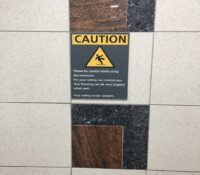
  5. Lack of warning signage
  6. Inadequate maintenance practices

This mat is not a fabric wiper mat but a rubber mat with holes whereby water can run under the mat onto the floor. The mat is also not positioned to protect walkers from the wet tile floor where wet track marks can be seen in this photo.

Applicable Industry Standards

ANSI/NFSI B101.6-2012 outlines requirements for matting selection, adequacy, and maintenance, emphasizing that matting must prevent contaminants from migrating beyond the mat. Relevant text from B101.6-2012:

  • 4.1 Safety -Matting of effective and sufficient quality shall be installed to remove contaminants, moisture and grit from footwear.
  • E 4.1 Mats perform an important safety benefit in areas where there is a hazard from contaminants, grit and moisture. Wet floors and grit on floors, particularly hard floors, pose a significant threat to pedestrians of slipping and falling. Mats remove moisture and grit from floors to reduce slip hazards..
  • E 6.1 The determining factor as to the adequacy or sufficiency of matting is when it achieves the goal of removing grit/foreign materials, dust and moisture so that it does not contaminate the floor surface following the matting installation. The amount of foreign materials or contaminants removal will affect the decision on mat selection.
  • 7.4 Wiper Mats – Wiper mats shall be removed and replaced when they become saturated resulting in moisture being tracked into the premises.
  • E 7.4 During periods of inclement weather, there needs to be additional mats available to replace the wiper mat when it no longer removes moisture from footwear.
  • 8.5 Wet Conditions – When the surface of the mat becomes wet, the mat shall be removed and replaced with a dry mat. When the area under the mat becomes wet, the mat shall be removed and the area under the mat shall be dried prior to mat replacement.
  • ASTM F1637-21 requires use of mats to maintain dry walking surfaces and reduce hazard from tracked contaminants. Relevant text from ASTM F1637.21:
  • 5.4.1  Mats, runners, or other means of ensuring that building entrances and interior walkways are kept dry shall be provided, as needed, during inclement weather.  Replacement of mats or runners may be necessary when they become saturated.
  • 5.4.2  Building entrances shall be provided with mats or runners, or other means to help remove foreign particles and other contaminants from the bottom of pedestrian footwear.  Mats should be provided to minimize foreign particles, that may become dangerous to pedestrians particularly on hard smooth floors, from being tracked on floors.
  • 5.4.3  Mats or runners should be provided at other wet or contaminated locations, particularly at known transitions from dry locations.  Mats at building entrances also may be used to control the spread of precipitation onto floor surfaces, reducing the likelihood of floors becoming slippery.

Additional Reference

Cintas Corporation, “Floor Mats: A Key Component of Your Slip and Fall Prevention Strategy.” is an excellent guideline

Conclusion

Slip-and-fall incidents involving wet floors are often preventable through use of proper matting systems.  Industry standards establish that matting must be sufficient, maintained, and adapted to conditions. Failure to do so increases the likelihood of hazardous conditions. The key issue is whether reasonable measures are taken to mitigate foreseeable hazardous conditions associated with matting.

Steven Hunt, CPCU, ARM, CXLT is a senior safety consultant at Warren. Steve, who specializes in premises liability incidents, construction falls and safety management programs, has achieved the designation of Associate Risk Management and Chartered Property and Liability Underwriter from Insurance Institute of America, Chicago, IL. and is a Certified Excel Tribometerist. Steve has investigated more than 1,000 accidents in his more than 45 -year career, including 49 cases involving fatalities. He holds a Bachelor of Science in Administrative Management with a Minor in Occupational Safety and Health from Clemson University.

Cross Cut Grooving in Walking Surfaces

As an experienced safety consultant, I am often called upon to investigate a wide range of premises liability incidents. One common type of incident that frequently results in serious injury is a fall on a painted walking surface.

The ASTM International Standard Practice for Safe Walking Surfaces, ASTM F1637, is a nationally recognized consensus standard that has existed for more than 30 years. It provides guidance to property owners and designers in the construction and maintenance of safe walking surfaces. The standard specifically addresses painted walking surfaces in Section 5.1.3.

ASTM F1637-21 states:

5.1.3 Walkway surfaces shall be slip resistant under expected environmental conditions and use. Painted walkways shall contain an abrasive additive, cross-cut grooving, texturing, or other appropriate means to render the surface slip resistant where wet conditions may be foreseeable.

In previous articles, I have discussed Read More

Differences in Slip Resistance of Materials used in Walking Surfaces

As an experienced safety consultant, I’m called on to investigate a wide range of premises liability incidents. In any slip and fall investigation it is important to assess the type of walking surface material involved and its corresponding slip resistance.

Slip resistance is a critical factor to consider when choosing the right flooring material for any space. It’s especially important in areas that are prone to moisture, spills, or other hazards that could make floors slippery and dangerous. A slip-resistant surface can help reduce the risk of Read More

Treating Painted Walking Surfaces for Improved Slip Resistance

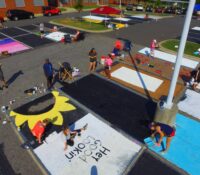
As an experienced safety consultant, I am called on to investigate a wide range of premises liability incidents. One common premises liability incident that often results in serious injury is a fall on a painted walking surface.

Slip and fall accidents can be devastating, causing serious injuries and even death. To prevent these accidents, it is important to ensure that walking surfaces, including painted ones, are slip-resistant. In this article, we will discuss the various methods for treating painted walking surfaces to make them slip-resistant. Read More

Slippery Painted Exterior Walking Surfaces

As an experienced safety consultant, I’m called on to investigate a wide range of premises liability incidents. One common premises liability incident that often results in serious injury is a fall on an improperly painted or maintained walking surface.

Slip and fall accidents are a common occurrence and can lead to serious injuries and even death. Painted surfaces are one of the most Read More

The Impact of Technology on Slip and Fall Incidents

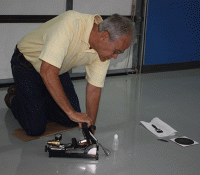
I have investigated hundreds of slip and fall incidents in my career. Today, we have new tools and technology available to assist investigators in conducting forensic investigations to determine the cause or causes of these incidents and to assist owners and operators in loss preventions efforts to minimize the potential of slip and fall incidents. Read More

Timber – Falling Beam Strikes Worker

As an experienced safety consultant, I have investigated many serious injuries and deaths at construction sites over the past 39 years. The United States Department of Labor reports that the fatal injury rate for the construction industry is highest of all industries in the nation. Out of 4,386 worker fatalities in private industry in calendar year 2014, 899 or 20.5% were in construction i.e., one in five worker deaths were in construction. Read More

Painting of Handicap Ramps

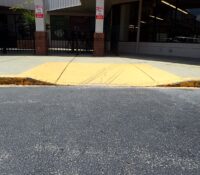
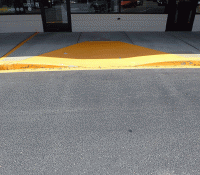
As an experienced safety consultant, I’m called on to investigate a wide range of premises liability incidents. One common premises liability incident that often results in serious injury is a fall on a handicap ramp. There are at least four types of handicap ramps – flare side, parallel, returned curb and built-up. Read More

A Steep Price: Improperly sloped curb ramps increase the potential of serious pedestrian injury

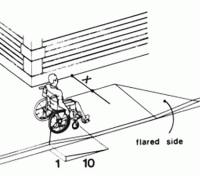
As an experienced safety consultant, I’m called to investigate a wide range of premises liability incidents. One common premises incident that often results in serious injury is a fall on a curb ramp. There are at least four types of curb ramps: flare side, parallel, returned curb and built-up. This post will focus primarily on flare side curb ramps which are the most common type constructed today. Read More

Who is Responsible for a “Booby Trap” Opening on a Roof Top? Part 3

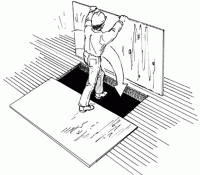
As an experienced safety consultant, I have investigated many incidents in my career in which a worker “falls through an opening.”  The majority of these incidents have occurred at construction sites and most resulted in serious injury or death. Read More

Type ofLoss

Not sure what you're looking for?
Browse All

Select Loss Category