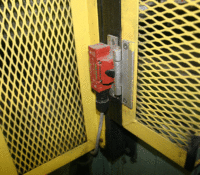
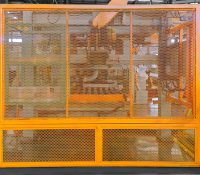
In the first blog in this series, we discussed the story behind the CE mark, the Machinery Directive, and the associated requirements regarding the design, production, and sale of machinery bearing the mark. The second blog discussed a cornerstone of safer machine design, the risk assessment. This installment will discuss another crucial piece of the safety puzzle, machine guard design. Read More
In the previous blog (Part One) we discussed the backstory behind the two stylized letters CE and what it means to the design of machinery bearing the mark. We outlined some of the requirements of the “Machinery Directive” (MD) which include what are known as “Essential Health and Safety Requirements.” The Essential Health and Safety Requirements incorporate an iterative risk reduction process during design that takes into account Read More
Two little letters, CE. Perhaps you have seen those two letters on a machine nameplate or some other equipment. What is the meaning behind those two stylized letters and how does it drive the design of safer machinery? Let’s take a closer look. Read More
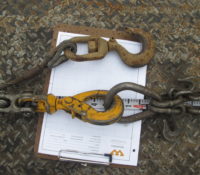
An unfortunate and tragic case that we investigated involved a commercial “rollback” recovery truck that was being used to transport a four-wheel drive diesel pickup. The diesel pickup was not in running order with its’ engine in the bed of the truck. Consequently, a commercial towing company was hired by the truck owner to transport the truck. In the process of loading the truck onto the rollback, the truck came uncoupled from the winch and cable system. The truck then rolled down the inclined bed of the rollback, running over and killing a bystander. Read More
One of my more interesting calls and subsequent forensic investigations was regarding water accumulating inside of 2X4 fluorescent light fixtures in a suspended ceiling of a secondary school in South Carolina.
The client called and indicated that the metal chassis of the lights were sweating and generating enough water to accumulate on the diffuser lens of the lights. Obviously, an on-site investigation was in order! Read More
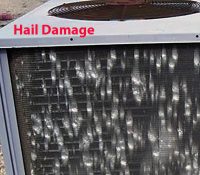
Hail property damage is frequently reported after an HVAC service call. Building owners are often unaware there is damage until the power bill starts trending higher and the HVAC system is simply not cooling effectively. Take look at the fins! The National Weather Service reported over $722 million in property damage from hail in 2018. Based on NWS data, hail caused more property damage than tornadoes or thunderstorms. Only Tropical Storms/Hurricanes at $12 billion, coastal storms at $1 billion and flooding at $1 billion were more costly than hail to property.
One of the items very susceptible to damage is the HVAC system. The heat that is removed from the interior of a building must be rejected to the environment. As such the HVAC system is placed where it can have unhindered access to outdoor air in order to function properly. This often results in the unit being placed in a large open space such as a rooftop, making it susceptible to damage such as hail. Read More
The Occupational Health and Safety Administration (OSHA) “Top 10 for 2018” violations once again have Machine Safeguarding earning a position on the list. Machine safeguarding was the 9th most cited standard as noted in the list below: