Forensic Engineers and Consultants

Category Archive: Tips and Advice

CHECK OUT THAT RACK! – The Importance of Inspecting Storage Racks for Proper Installation

Author

People have too much “stuff”. Manufacturers, retailers, wholesalers, and commercial enterprises all carry inventory of “stuff”, too. According to the Energy Information Administration’s (EIA’s) own statistics, in 2018, the US had over 17.4 billion ft2 of warehouse and storage. Growing from just 13 billion ft2 in 2012, warehouse and storage space is the fastest growing and now the largest use of commercial space in the US, overtaking office space for the first time in modern history.


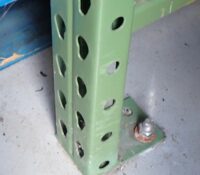
Almost every one of those buildings contains storage racks. And this doesn’t include the mercantile spaces. You can go to a big box retailer and buy cereal from a lower shelf while pallets of grain or packaged drinks sit 20-30 feet above, waiting to be introduced to the customer.

There is no specific OSHA regulation for anchoring storage racks – Read More
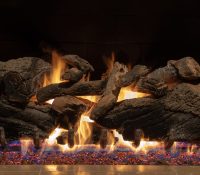
Stop or I’ll Soot!!!

Fire. Something about fire touches our brainstems…both good and bad!  Uncontrolled fire is terrifying and deadly to be sure.  But the controlled burning of wood at a campfire or in a fireplace in your home almost can’t be beat, to my mind! For that very reason, a fairly common amenity to houses nowadays is the gas log fireplace insert.

When not installed properly, these logs will generate soot. These soot particles can leave the fireplace and meander.  All. Over. Your. House.  Read More

The End of Daylight-Saving Time Leads to More Vehicle and Pedestrian Collisions

Author

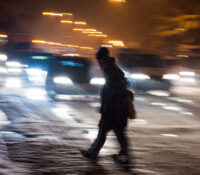
Daylight saving (DST) ends on November 2, 2025, and with it the clocks will “fall back” an hour.  While it is nice to gain an hour of sleep, the end of daylight-saving time also comes with a increase of vehicle crashes, injuries, and pedestrian fatalities. This phenomenon prompts the question: What is so dangerous about being a pedestrian at night? Read More

Structure Fires in Eating and Drinking Establishments

Author

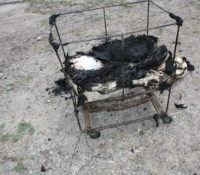
Eating and drinking establishments see an average of 7,410 structure fires per year based on a 2017 report published by the National Fire Protection Association (NFPA). The report analyzed available data from the U.S. Fire Administration’s National Fire Incident Reporting System (NFIRS) and the NFPA’s annual fire department survey for the years 2010-2014.

Read More

Spontaneous Combustion…Is it hot in here or is it just me???

In the old-timey Fire Triangle, you have heat, fuel, and oxygen.  Get these three together in the right quantities, and you get fire.  What if the fuel provides its own heat?  That’s spontaneous combustion, or spontaneous ignition.  NFPA921 defines this as “initiation of combustion of a material by an internal chemical or biological reaction that has produced sufficient heat to ignite the material.” Read More

The Alphabet Soup of Expert Certifications

When consulting as an expert witness, having certifications can assist in establishing your credibility and qualifications.  If you’ve perused the Curriculum Vitaes of the experts at The Warren Group, Inc., you may have seen some of these letters trailing after our names.  What do they mean and what organizations grant them?  The following is a sampling of some of the certifications our experts have acquired: Read More

Waterpark Woes

Author

On July 12, 2024, a family entered the local water park to cool down. The family consisted of a mother and her two sons. While walking toward the wave pool area, the mother stepped off the wooden stairs and onto the surrounding concrete landing. As she did so, she slipped on a puddle of water that had accumulated on the surface. She fell backward, landing on her left side and striking her elbow and the back of her head against the stairs—effectively ending the family’s outing before it began. Read More

Hidden Dangers at Home 3 Surprising Household Hazards You Shouldn’t Ignore

Most folks think that chemical hazards are strictly limited to manufacturing or other industrial sites.  The fact that there are potential chemical hazards in the safe confines of their homes often comes as a surprise.

A surprising number of residential fires are caused by the spontaneous combustion of stain application materials.  When an oil-based stain is applied to furniture or flooring, the oils react with the oxygen in the air to form very large polymer chains.  The process of the liquid stain turning to solid barrier is called curing (it is not drying via evaporation) and the reaction is oxidation.  This reaction generates heat.  On the floor or chair, the heat dissipates into the room without an issue.  That same oxidation reaction is occurring on the brush, towel, sponge, or rag that was used to apply the stain.  If those materials are piled in a corner or in a trash can, the heat cannot dissipate.  If there is enough product present, enough heat can be generated to Read More

Machinery Directive VS Machinery Regulation – A Notable Change

Author

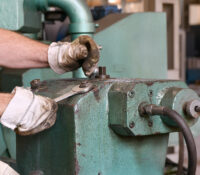
In 2023, the new European Machinery Regulation was published which replaces the 2006 Machinery Directive.  The 2023 Machinery Regulation is slated to be entered into force and application on January 20, 2027.  A number of changes and/or clarifications are included in this new Machinery Regulation, not the least of which is the definition for “substantial modification.” Read More

Fire Sprinkler History and Development

Author

Did you know that I’m passionate about fire protection? Instead of proving it with stories recounting soakings by numerous fire hydrant, fire pump, and deluge system tests, I will share more about fire sprinklers! (Working on solidifying my fire sprinkler nerd status!)

Automatic fire sprinklers have an over 150-year history, with Henry S. Parmelee being credited with Read More

Type ofLoss

Not sure what you're looking for?
Browse All

Select Loss Category