

Author J. Steven Hunt

As an experienced safety consultant, I am often called upon to investigate a wide range of premises liability incidents. One common type of incident that frequently results in serious injury is a fall on a painted walking surface.
The ASTM International Standard Practice for Safe Walking Surfaces, ASTM F1637, is a nationally recognized consensus standard that has existed for more than 30 years. It provides guidance to property owners and designers in the construction and maintenance of safe walking surfaces. The standard specifically addresses painted walking surfaces in Section 5.1.3.
ASTM F1637-21 states:
5.1.3 Walkway surfaces shall be slip resistant under expected environmental conditions and use. Painted walkways shall contain an abrasive additive, cross-cut grooving, texturing, or other appropriate means to render the surface slip resistant where wet conditions may be foreseeable.
In previous articles, I have discussed the problems associated with painting walking surfaces. Untreated painted walking surfaces often become slippery when wet and have been the cause of numerous slip-and-fall incidents. The most common method used to improve slip resistance on painted walking surfaces is to add an abrasive additive to the top coat of paint during the application process.
Unfortunately, problems can still arise with this treatment option. If the abrasive additive is not provided in sufficient quantity, not mixed properly, or is applied non-uniformly with areas being missed, adequate slip resistance will not be achieved. Additionally, abrasive additives will wear over time as they are subjected to foot traffic, vehicle traffic, temperature fluctuations, ultraviolet radiation, and other environmental conditions. Therefore, this treatment method is not maintenance-free and must be carefully monitored, evaluated, and reapplied when necessary.
Another treatment option for painted walking surfaces specified in ASTM F1637 Section 5.1.3 is cross-cut grooving. While it is less commonly used, it is increasingly being seen because of certain advantages it offers in specific walking surface environments.
Cross-cut grooving, also known as diamond grooving or double-cut grooving, is a specialized concrete surfacing technique used to maximize traction and slip resistance. It involves cutting two sets of intersecting channels into the concrete, typically at 45-degree angles to each other, creating a multi-directional grip pattern.
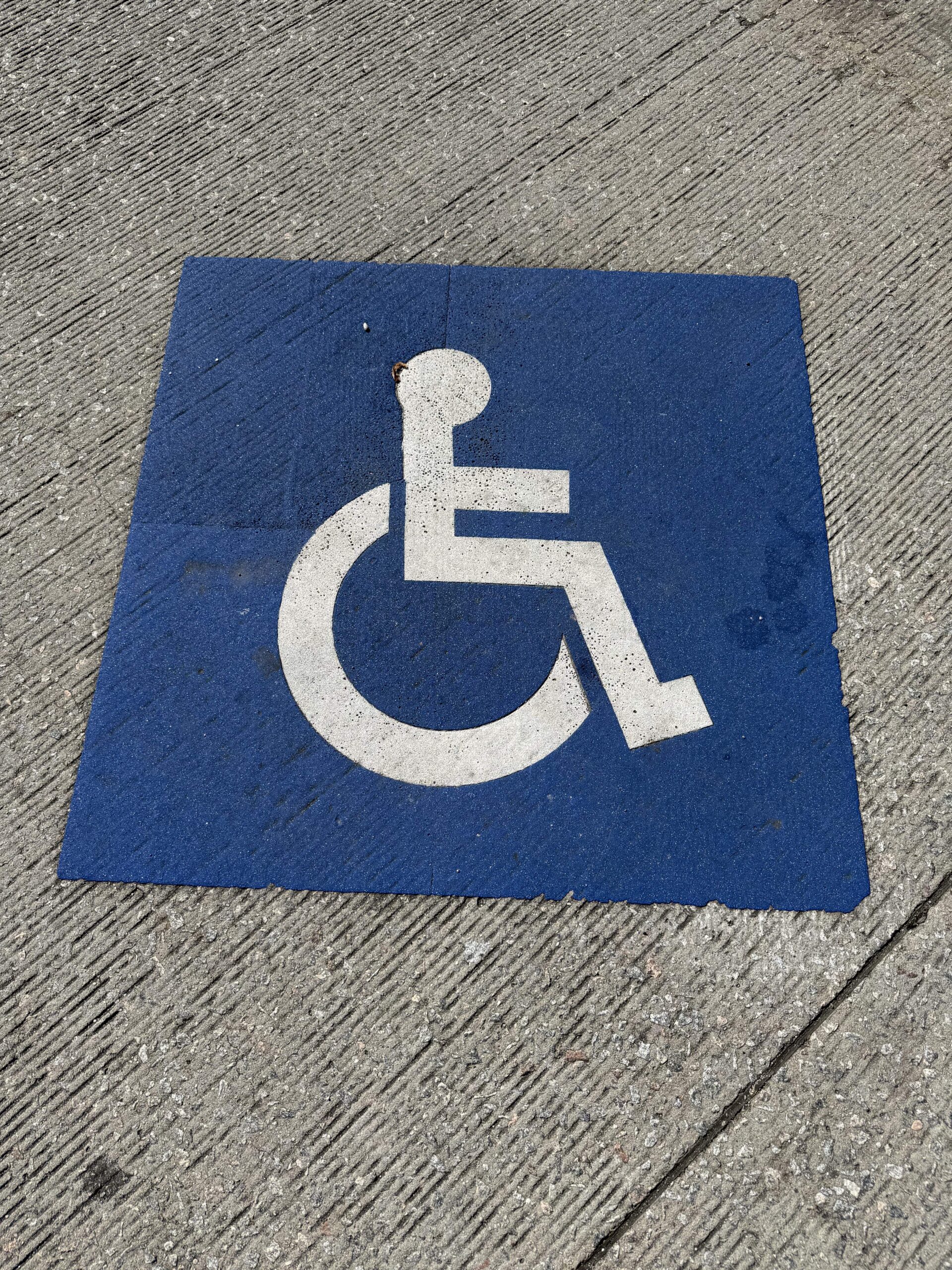
This is as example of a walking surface in a state rest area’s handicap parking place where both cross cut grooving and paint containing an abrasive aggregate are both used. This walking surface is located in a heavy foot and vehicle traffic area in front of the facilities.
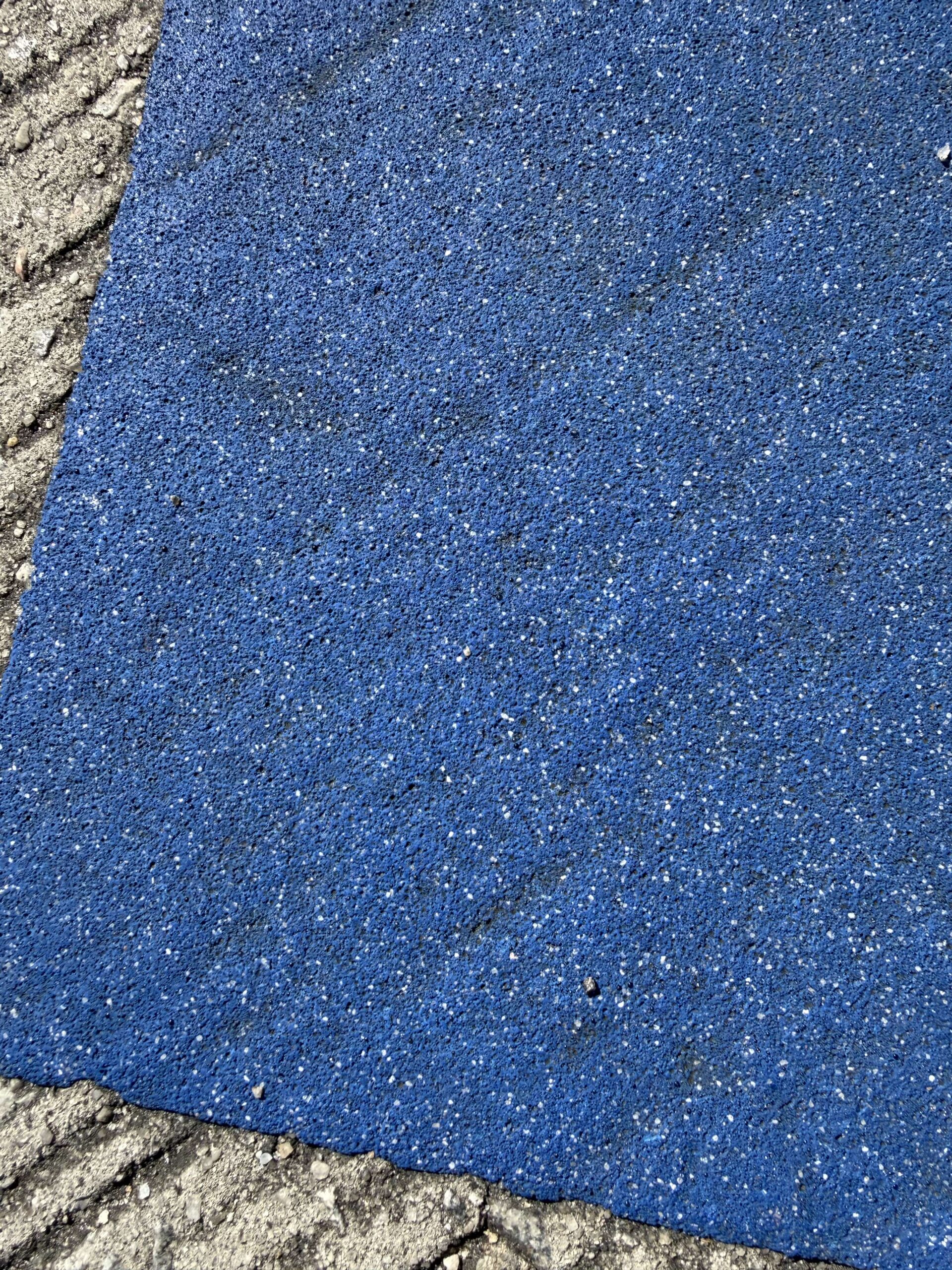
A close-up view of the application shows the cross-cut grooving and the heavy abrasive additive in the painted surface. When a hand is rubbed across the surface, it has a rough, sharp texture.
Key Benefits of Cross-Cut Patterns
Multi-Directional Traction: Unlike straight grooves that only help prevent slips in one direction, the diamond pattern provides all-direction grip, which is especially beneficial in areas where pedestrians frequently change direction.
Enhanced Fluid Drainage: The intersecting channels allow water, oils, or other fluids to drain away from the walking surface more efficiently than single-direction grooves.
Reduced Injury Risk: This pattern can help prevent lateral slips and twisting injuries.
Durability: Grooved textures are permanent and do not degrade under heavy traffic the way anti-slip paints or topical coatings can.
Application Methods
Fresh Concrete: For new concrete pours, walking groovers or Texas walking groovers are used to manually stamp or cut patterns while the slab is still wet.
Hardened or Cured Concrete: For existing surfaces, specialized saws equipped with diamond-tipped blades are used to cut precise channels. This process is commonly referred to as diamond grooving. This method is often preferred because it avoids the timing constraints associated with working with freshly poured concrete.
Common Patterns and Tools
Diamond Pattern: Considered the most effective for traction; it creates a grid of raised diamond shapes.
Tractor Tread (Herringbone): Commonly used on steep ramps and walkways to maximize uphill and downhill grip.
Standard Spacing: Professional highway and industrial applications often use grooves that are 1/8 inch wide, 3/4 inch apart, and 1/4 inch deep.
Conclusion
There are several methods available for treating painted walking surfaces to improve slip resistance. In addition to adding abrasive additives to paint, cross-cut grooving is another effective method for improving traction. In certain environments, this technique can significantly reduce the risk of slip-and-fall incidents.
Steven Hunt, CPCU, ARM, CXLT is a senior safety consultant at Warren. Steve, who specializes in premises liability incidents, construction falls and safety management programs, has achieved the designation of Associate Risk Management and Chartered Property and Liability Underwriter from Insurance Institute of America, Chicago, IL. and is a Certified Excel Tribometerist. Steve has investigated more than 1,000 accidents in his more than 45 -year career, including 49 cases involving fatalities. He holds a Bachelor of Science in Administrative Management with a Minor in Occupational Safety and Health from Clemson University.
