Forensic Engineers and Consultants

Archive: Commercial

Spontaneous Combustion…Is it hot in here or is it just me???

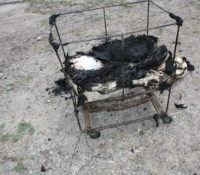
In the old-timey Fire Triangle, you have heat, fuel, and oxygen.  Get these three together in the right quantities, and you get fire.  What if the fuel provides its own heat?  That’s spontaneous combustion, or spontaneous ignition.  NFPA921 defines this as “initiation of combustion of a material by an internal chemical or biological reaction that has produced sufficient heat to ignite the material.” Read More
Hidden Heat: The Unseen Hazard of a High Resistance Connection

Author

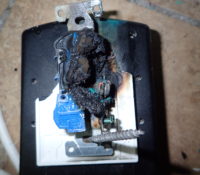
A typical residence can have upwards of 10,000 feet of electrical conductors installed, most of which are buried in the walls, attics and crawlspaces.  A commercial building can have 100,000 to upwards of 1 million feet of electrical conductors.  At each device such as a switch or a receptacle are at least three, and typically six or more connections of these conductors within a junction box.  The connections can be in the form of twisted connectors, screw terminals, push in terminals and crimped connectors.

Read More

The Alphabet Soup of Expert Certifications

When consulting as an expert witness, having certifications can assist in establishing your credibility and qualifications.  If you’ve perused the Curriculum Vitaes of the experts at The Warren Group, Inc., you may have seen some of these letters trailing after our names.  What do they mean and what organizations grant them?  The following is a sampling of some of the certifications our experts have acquired: Read More

Machine Guarding Resources

Author

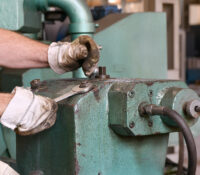
So, you find yourself with a machine hazard that you need to guard.  Where do your turn for guidance regarding guards?  Several resources are available for the person who is tasked with providing machine guarding.

The United States government provides resources in the Code of Federal Regulations (CFR).  These can be found at www.ecfr.gov.  Title 29 of the CFR, section 1910 covers “General Industry” regulations.  1910 Subpart O, covers Machinery and Machine Guarding.  Definitions are covered in 1910.211 and it is wise to understand how terms are defined. For instance, in 1910.211(a)(1), Point of operations is defined by the regulation as “that point at which cutting, shaping, boring, or forming is accomplished on the stock.” Read More

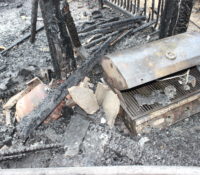
Don’t Get Burned With Your Gas Grill!

Author

If there is one thing Americans can agree upon, it is the enjoyment that comes from an outdoor barbeque.  Whether a summertime cookout or a fall BBQ to watch a football game, we all love the fun and fellowship that comes from sharing a meal that was prepared outdoors on a grill or smoker.  In fact, 64% of Americans own a grill or smoker.  The great majority of these are LP fueled gas grills with comparatively few natural gas fired grills.  These products can be enjoyed safely when designed, installed, and used in a proper manner.  However, given the grill’s use of flammable fuel gas and high temperatures, the potential exists for things to go wrong and result in burn injuries or uncontained fires that spread to the surroundings. Read More

Safety Hazards in Waterjet Cutting

Author

Waterjet cutting machines (often simply called ‘waterjets’ in the industry) are essentially platforms that use ultra-high pressure water to manufacture cut parts with accuracy as high as .001 inch. They can cut materials ranging from glass and stone to steel and even plastics. Such machines can cost under $1.00 per minute to run, even including labor. Waterjets are some of the most versatile cutting tools available today. They produce virtually no heat-affected zone. They also use CNC (computer numerically controlled) programs, which allow continuously variable speeds for different edge conditions and cut quality. The waterjet dissipates heat, and the jet stream minimizes harmful chemical vaporization from cut materials. Small and mid-sized companies throughout the U.S. depend on these powerful tools to manage all sorts of custom two-dimensional cuts.

But waterjets present unique hazards to the manufacturing environment. The following challenges require special attention: Read More

Machinery Directive VS Machinery Regulation – A Notable Change

Author

In 2023, the new European Machinery Regulation was published which replaces the 2006 Machinery Directive.  The 2023 Machinery Regulation is slated to be entered into force and application on January 20, 2027.  A number of changes and/or clarifications are included in this new Machinery Regulation, not the least of which is the definition for “substantial modification.” Read More

Fire Sprinkler History and Development

Author

Did you know that I’m passionate about fire protection? Instead of proving it with stories recounting soakings by numerous fire hydrant, fire pump, and deluge system tests, I will share more about fire sprinklers! (Working on solidifying my fire sprinkler nerd status!)

Automatic fire sprinklers have an over 150-year history, with Henry S. Parmelee being credited with Read More

WARREN Welcomes Mechanical Engineer Brian Tenace, M.S.M.E., P.E.

Author

Brian’s Areas of Expertise Include:

Read More

The Potential Leak in Your Kitchen Cabinet – Flexible Supply Connectors

Author

One of the more innovative products to emerge on the plumbing scene in the past 20 years or so (in my opinion) is the flexible supply connector.  A lot of people have seen but probably not paid much attention to them under their sink or perhaps from the toilet supply valve to the toilet tank.  Most have Read More

Type ofLoss

Not sure what you're looking for?
Browse All

Select Loss Category