Forensic Engineers and Consultants

blog

Failure to Maintain Tow Hook Latch Results in Bystander Death

Author

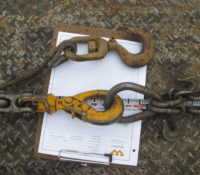
An unfortunate and tragic case that we investigated involved a commercial “rollback” recovery truck that was being used to transport a four-wheel drive diesel pickup.  The diesel pickup was not in running order with its’ engine in the bed of the truck.  Consequently, a commercial towing company was hired by the truck owner to transport the truck.  In the process of loading the truck onto the rollback, the truck came uncoupled from the winch and cable system.  The truck then rolled down the inclined bed of the rollback, running over and killing a bystander. Read More

Distributed Control Systems…Data is the Key

Wouldn’t it be great to have a built-in camera to let you see exactly what went wrong before an incident?  In many manufacturing instances there is, chemical plants especially.  The computer system that operates the plant is called a Distributed Control System (DCS) and it has the capacity to monitor thousands of process variables (flow rates, temperatures, pressures, levels, valve positions, pumps on/off) simultaneously. Read More

Waste Gas Treatment Equipment Failure: Design & Installation Defects Cause Fire

The thirty-thousand-foot view of manufacturing is raw material in, alter in an appropriate fashion, finished product out, by-product out.  Since the finished product keeps a business in business, it gets the most attention.  What about by-products or waste streams?  Read More

Why the Structural Load Path MUST be Considered During Renovation to Prevent Property Damage

Author

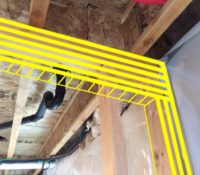
Understanding the structural load path is imperative when considering renovations in a home that may require the removal of a load-bearing wall. Some homeowners consider adding a new door or window opening and worry if the structure will collapse. Another reason could be that the owner wants an open concept floor plan. The goal is to remove walls and open their living space. Read More

Water in the Light Fixtures??? How HVAC Defects Appear in Strange Places

Author

One of my more interesting calls and subsequent forensic investigations was regarding water accumulating inside of 2X4 fluorescent light fixtures in a suspended ceiling of a secondary school in South Carolina.

The client called and indicated that the metal chassis of the lights were sweating and generating enough water to accumulate on the diffuser lens of the lights.  Obviously, an on-site investigation was in order! Read More

Hail Isn’t Cool

Author

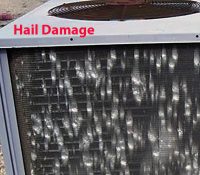
Hail property damage is frequently reported after an HVAC service call.  Building owners are often unaware there is damage until the power bill starts trending higher and the HVAC system is simply not cooling effectively. Take look at the fins! The National Weather Service reported over $722 million in property damage from hail in 2018.  Based on NWS data, hail caused more property damage than tornadoes or thunderstorms.  Only Tropical Storms/Hurricanes at $12 billion, coastal storms at $1 billion and flooding at $1 billion were more costly than hail to property.

One of the items very susceptible to damage is the HVAC system.  The heat that is removed from the interior of a building must be rejected to the environment.   As such the HVAC system is placed where it can have unhindered access to outdoor air in order to function properly.  This often results in the unit being placed in a large open space such as a rooftop, making it susceptible to damage such as hail.  Read More

When the Walls Come Tumbling Down… Retaining Wall Basics

Author

A wall is really boring until it fails. A retaining wall is supposed to hold back soil to either support a structure or keep a space clear. When it fails, both of those roles are compromised. A retaining wall does not have to collapse to fail. In fact, a failure is perhaps better defined as when the wall does not perform as expected. Read More

Machine Guarding and Risk Assessment

Author

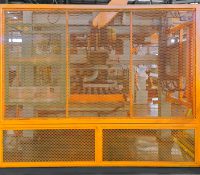
The Occupational Health and Safety Administration (OSHA) “Top 10 for 2018” violations once again have Machine Safeguarding earning a position on the list. Machine safeguarding was the 9th most cited standard as noted in the list below:

  1. Fall protection, construction (29 CFR 1926.501)
  2. Hazard communication standard, general industry (29 CFR 1910.1200)
  3. Scaffolding, general requirements, construction (29 CFR 1926.451)
  4. Respiratory protection, general industry (29 CFR 1910.134)
  5. Control of hazardous energy (lockout/tagout), general industry (29 CFR 1910.147)
  6. Ladders, construction (29 CFR 1926.1053)]
  7. Powered industrial trucks, general industry (29 CFR 1910.178)
  8. Fall Protection–Training Requirements (29 CFR 1926.503
  9. Machinery and Machine Guarding, general requirements (29 CFR 1910.212)
  10. Eye and Face Protection (29 CFR 1926.102)

(Source: www.osha.gov/Top_Ten_Standards.html)

Read More

Unguarded Shear Point on Force Tester Amputates Worker’s Finger

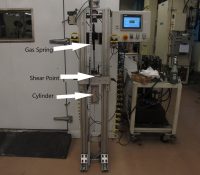
A worker was injured while testing gas springs similar to the type that hold the hatchback of an SUV open. The hazard that injured the worker was an unguarded shear point. The tester contained a mounting plate that was raised and lowered by a pneumatic cylinder.

The pneumatic cylinder lowered the mounting plate while the worker’s fingers were in the hazardous, unguarded shear point. Read More

Hazards Can Lurk Anywhere … Watch Your Step …

Author

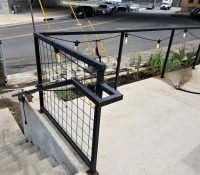
While on a lunch stop during a recent vacation trip through Tennessee, I happened across a safety hazard that required immediate attention.  The establishment had a raised concrete patio at the front with a steel railing around the perimeter.  At one edge of the patio was a set of stairs with a continuation of the steel railing used as a handrail.  The top edge of the patio had light strings wrapping the top metal bar as accent lighting for the perimeter.  The light string continued down the stair handrail wrapped in the same manner as the rest of the patio. Read More

Type ofLoss

Not sure what you're looking for?
Browse All

Select Loss Category