Forensic Engineers and Consultants

blog

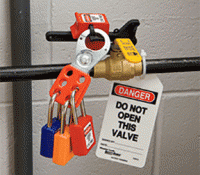
How a Central Indian Town Changed the United States Code of Federal Regulations

On December 3, 1984, at a pesticide ingredient manufacturing facility owned by Union Carbide, a leak occurred in the Methyl Isocyanate (MIC) plant. Due to the toxic nature of the gases released and the plant’s proximity to local residences, the death toll was in the thousands; both plant workers and nearby residents.  The first recorded public meeting in response to this incident was on December 9th, in Institute, WV, the site of Union Carbide’s only US MIC production unit.  Full disclosure: my father was a research & development chemist for Union Carbide and Institute is about 10 miles down the Kanawha River from my hometown of Charleston, WV. Read More


Water Damage from Leaking Shower Stalls

Author

Have you ever had to have a leaking shower pan for a tiled shower stall replaced, only to have a recurrence a few years later? If so, it is likely that it was not properly built and/or repaired. In most installations, the shower stall is constructed with an underlying one-piece flexible membrane of PVC that is attached to the wall studs before the backer board and wall tile is installed. No nails or screws should penetrate the membrane below the level of the curb of the shower stall. The only opening in the membrane below the curb must be the hole for the shower drain to connect to the house plumbing. The shower drain is designed to allow water on top of the membrane to flow into the drain via weep holes for that purpose. Read More

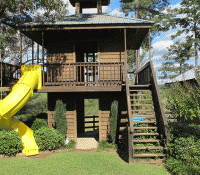
Children Will Fall At Playgrounds. What Shall We Do To Protect Them? A Multipart Blog Series – Part II: A Brief Summary of Playground Safety Standards

Welcome to the second part in our multipart blog series examining a young boy’s fall and injury at a public playground. If you missed the first part in this series, click www.warrenforensics.com/2017/10/11/children-will-fall-at-playgrounds-what-shall-we-do-to-protect-them-a-multipart-blog-series-part-i/ to read it. In this post, we will highlight some resources that designers of public playgrounds can use to help ensure their designs are reasonably safe. Read More

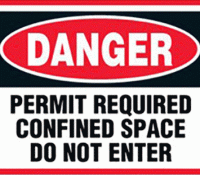
Permit-Required Confined Spaces – What You Need to Know to Safely Enter (and Exit!)

According to the OSHA regulations, a confined space is anyplace that meets the following criteria:

(1)   Is large enough and so configured that an employee can bodily enter and perform assigned work; and
(2)  Has limited or restricted means for entry or exit; and
(3)  Is not designed for continuous employee occupancy. Read More

Warren Announces the Retirement of Dan Olson

With both pleasure and regret, Warren announces the retirement of Dan Olson. Dan has been a consulting engineer at Warren since its founding 20 years ago and has been a leader in the development of Warren and its culture from the onset. Read More

Children Will Fall At Playgrounds. What Shall We Do To Protect Them? A Multipart Blog Series – Part I

A 5-year old boy was severely injured at a public playground when he fell through a second floor opening around a fireman’s pole in a playhouse. He fell more than seven feet and struck a bare concrete floor. We are thankful that he eventually recovered from his injuries. The person who designed and built the playground was accused of negligence. A lawsuit ensued, and eventually settled in favor of the boy. Read More

Commercial Gas-Fired Cookers Can Do More Than Burn

The first hazard that comes to mind when thinking about large scale ovens and steam kettles is burning or scalding injury. Carbon monoxide poisoning is just as dangerous but less understood, so oftentimes proper prevention methods are not followed. In the United States, this results in over 20,000 emergency room visits and over 400 deaths a year. Before we get to the case study and poisoning prevention methods, we need to know what CO is, where it comes from, and why it is poisonous. Read More

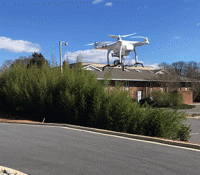
Ready, Set, Fly! – Understanding Another Technology for Forensic Investigations

Author

This is the first blog in a series on integrating new technologies into the process of forensic investigations.  Documenting the scene of an incident accurately, efficiently, and safely is a key step in every investigation.  Busy roadways and unstable structures present hazards to the investigator during the investigation process. The use of remote sensors can reduce these risks and provide data that otherwise could not safely be obtained. Read More

Congratulations to Jennifer Morningstar on receiving Professional Engineer’s License

Warren is thrilled to announce that Jennifer Morningstar passed the Principles and Practice of Chemical Engineering exam and received her South Carolina Professional Engineer’s License on July 17, 2017. She has been with Warren since September 2011, in a non-engineering capacity but has rejoined the ranks of engineers as a consultant. Read More

Chemical Engineers: More than Glorified Plumbers – Really!

As a senior at Virginia Tech, I was told that ChemE’s were little more than glorified plumbers.  Looking back, I’m pretty sure it was to keep our geek-egos in check. It was an effective tool! However, as I grew and traveled as a professional, it became an effective descriptor; applying to a larger scale and using a modifier or two for specific applications.  So, if you have a loss that falls into one of the categories below, a ChemE could be the expert you need. Read More

Type ofLoss

Not sure what you're looking for?
Browse All

Select Loss Category