Forensic Engineers and Consultants

Category Archive: Case Studies

Case Study: Fatality Servicing Unsupported Excavator Boom

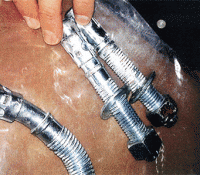
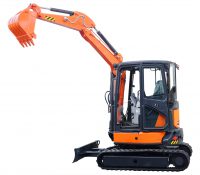
A mini-excavator at a job site developed a leak at a hydraulic fitting at the base of the cylinder that raises and lowers the boom. A subcontractor foreman at the site raised the boom to search for the leak. The foreman found and attempted to tighten the leaking fitting. When he did, the fitting separated from the base of the cylinder, releasing the hydraulic pressure that held the boom aloft. The boom fell and the bucket struck a nearby superintendent for the general contractor.

Read More

Defective Vertical Baler Causes Serious Crush Injury to Operator’s Arm

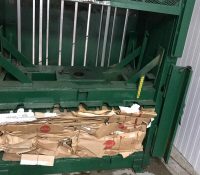
I recently worked on an interesting case involving a box baler. An employee of a butcher shop put some empty cardboard boxes in a vertical box baler and pushed the control switch to compact the boxes. After the 30 by 60 inch platen weighing 851 pounds returned to its raised position, the employee reached into the open space above the bottom door on the baler and began to clear cardboard from the bale tie slots in the bottom of the raised platen. Suddenly, and without warning, the steel pin attaching the platen to the raised hydraulic cylinder rod failed. The heavy steel platen fell and crushed his arm which was outstretched over the baler door into the compaction space.

Read More

Children Will Fall At Playgrounds. What Shall We Do To Protect Them? A Multipart Blog Series – Part III: An Overview of Selected Playground Safety Technologies

Welcome to the third and final post in our multipart series of blog posts about a young boy’s fall and serious injury at a public playground. In our first post we gave a brief overview of the incident and our investigation. In the second post we discussed some of the safety standards applicable to public playgrounds. In this post, we will examine some of the impact-absorbing playground surfaces available to protect children at playgrounds from injury. If you would like to read the first two posts, they are available here and here.
Read More

Children Will Fall At Playgrounds. What Shall We Do To Protect Them? A Multipart Blog Series – Part II: A Brief Summary of Playground Safety Standards

Welcome to the second part in our multipart blog series examining a young boy’s fall and injury at a public playground. If you missed the first part in this series, click www.warrenforensics.com/2017/10/11/children-will-fall-at-playgrounds-what-shall-we-do-to-protect-them-a-multipart-blog-series-part-i/ to read it. In this post, we will highlight some resources that designers of public playgrounds can use to help ensure their designs are reasonably safe. Read More

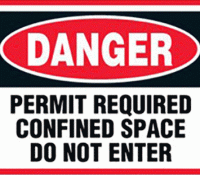
Permit-Required Confined Spaces – What You Need to Know to Safely Enter (and Exit!)

According to the OSHA regulations, a confined space is anyplace that meets the following criteria:

(1)   Is large enough and so configured that an employee can bodily enter and perform assigned work; and
(2)  Has limited or restricted means for entry or exit; and
(3)  Is not designed for continuous employee occupancy. Read More

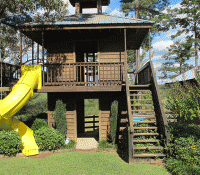
Children Will Fall At Playgrounds. What Shall We Do To Protect Them? A Multipart Blog Series – Part I

A 5-year old boy was severely injured at a public playground when he fell through a second floor opening around a fireman’s pole in a playhouse. He fell more than seven feet and struck a bare concrete floor. We are thankful that he eventually recovered from his injuries. The person who designed and built the playground was accused of negligence. A lawsuit ensued, and eventually settled in favor of the boy. Read More

Commercial Gas-Fired Cookers Can Do More Than Burn

The first hazard that comes to mind when thinking about large scale ovens and steam kettles is burning or scalding injury. Carbon monoxide poisoning is just as dangerous but less understood, so oftentimes proper prevention methods are not followed. In the United States, this results in over 20,000 emergency room visits and over 400 deaths a year. Before we get to the case study and poisoning prevention methods, we need to know what CO is, where it comes from, and why it is poisonous. Read More

Chemical Engineers: More than Glorified Plumbers – Really!

As a senior at Virginia Tech, I was told that ChemE’s were little more than glorified plumbers.  Looking back, I’m pretty sure it was to keep our geek-egos in check. It was an effective tool! However, as I grew and traveled as a professional, it became an effective descriptor; applying to a larger scale and using a modifier or two for specific applications.  So, if you have a loss that falls into one of the categories below, a ChemE could be the expert you need. Read More

Improper Design Leads to Fatigue Failure In Blower Shaft

Author

A blower used to exhaust air from an industrial process stopped functioning when the blower wheel drive shaft fractured.  The process, and thereby most of the plant, had to operate at a reduced volume until the blower wheel could be replaced.  The blower wheel had been installed during a shutdown a week before the incident.  The blower wheel was a spare installed when the existing blower wheel was sent for scheduled remanufacturing. Read More

Injury Involving a Capstan Winch

A capstan winch uses a mechanically powered rotating cylinder, called a capstan, to apply pulling force through a rope. When the rope is looped around the rotating capstan and tightened, friction between the rope and capstan allows the winch to apply force to pull a load. A typical capstan winch is shown in Figure 1 below. Read More

Type ofLoss

Not sure what you're looking for?
Browse All

Select Loss Category