Forensic Engineers and Consultants

Category Archive: Safety and Design

Failure to Maintain Tow Hook Latch Results in Bystander Death

Author

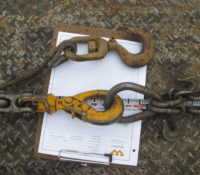
An unfortunate and tragic case that we investigated involved a commercial “rollback” recovery truck that was being used to transport a four-wheel drive diesel pickup.  The diesel pickup was not in running order with its’ engine in the bed of the truck.  Consequently, a commercial towing company was hired by the truck owner to transport the truck.  In the process of loading the truck onto the rollback, the truck came uncoupled from the winch and cable system.  The truck then rolled down the inclined bed of the rollback, running over and killing a bystander. Read More

Distributed Control Systems…Data is the Key

Wouldn’t it be great to have a built-in camera to let you see exactly what went wrong before an incident?  In many manufacturing instances there is, chemical plants especially.  The computer system that operates the plant is called a Distributed Control System (DCS) and it has the capacity to monitor thousands of process variables (flow rates, temperatures, pressures, levels, valve positions, pumps on/off) simultaneously. Read More

Why the Structural Load Path MUST be Considered During Renovation to Prevent Property Damage

Author

Understanding the structural load path is imperative when considering renovations in a home that may require the removal of a load-bearing wall. Some homeowners consider adding a new door or window opening and worry if the structure will collapse. Another reason could be that the owner wants an open concept floor plan. The goal is to remove walls and open their living space. Read More

When the Walls Come Tumbling Down… Retaining Wall Basics

Author

A wall is really boring until it fails. A retaining wall is supposed to hold back soil to either support a structure or keep a space clear. When it fails, both of those roles are compromised. A retaining wall does not have to collapse to fail. In fact, a failure is perhaps better defined as when the wall does not perform as expected. Read More

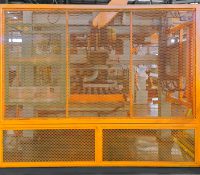
Machine Guarding and Risk Assessment

Author

The Occupational Health and Safety Administration (OSHA) “Top 10 for 2018” violations once again have Machine Safeguarding earning a position on the list. Machine safeguarding was the 9th most cited standard as noted in the list below:

  1. Fall protection, construction (29 CFR 1926.501)
  2. Hazard communication standard, general industry (29 CFR 1910.1200)
  3. Scaffolding, general requirements, construction (29 CFR 1926.451)
  4. Respiratory protection, general industry (29 CFR 1910.134)
  5. Control of hazardous energy (lockout/tagout), general industry (29 CFR 1910.147)
  6. Ladders, construction (29 CFR 1926.1053)]
  7. Powered industrial trucks, general industry (29 CFR 1910.178)
  8. Fall Protection–Training Requirements (29 CFR 1926.503
  9. Machinery and Machine Guarding, general requirements (29 CFR 1910.212)
  10. Eye and Face Protection (29 CFR 1926.102)

(Source: www.osha.gov/Top_Ten_Standards.html)

Read More

Case Study: Fatality Servicing Unsupported Excavator Boom

A mini-excavator at a job site developed a leak at a hydraulic fitting at the base of the cylinder that raises and lowers the boom. A subcontractor foreman at the site raised the boom to search for the leak. The foreman found and attempted to tighten the leaking fitting. When he did, the fitting separated from the base of the cylinder, releasing the hydraulic pressure that held the boom aloft. The boom fell and the bucket struck a nearby superintendent for the general contractor.

Read More

Danger Lurking in the Hot Tub

Author

Several dangers involving the use of a hot tub (spa) may readily come to mind, such as the risk of shock or electrocution, or the risk of drowning for unsupervised young children.  Not so readily apparent is the effect of overheating the human body, or “hyperthermia”.

Some individuals are more susceptible to the effects of hyperthermia, including the elderly, young children, and those in poor health.  The effects of hyperthermia, or overheating of the human body, cause direct responses such as headache, nausea, heat exhaustion, increased cardiac output, lethargy, confusion, heat stroke and unconsciousness.  The onset of hyperthermia is defined as being at 99.5° F; if the body temperature reaches 104° F, a life-threatening medical emergency exists.  Read More

Defective Vertical Baler Causes Serious Crush Injury to Operator’s Arm

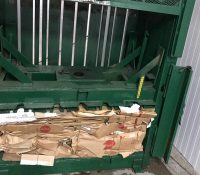
I recently worked on an interesting case involving a box baler. An employee of a butcher shop put some empty cardboard boxes in a vertical box baler and pushed the control switch to compact the boxes. After the 30 by 60 inch platen weighing 851 pounds returned to its raised position, the employee reached into the open space above the bottom door on the baler and began to clear cardboard from the bale tie slots in the bottom of the raised platen. Suddenly, and without warning, the steel pin attaching the platen to the raised hydraulic cylinder rod failed. The heavy steel platen fell and crushed his arm which was outstretched over the baler door into the compaction space.

Read More

Not Your Father’s House Fire

Remember the good old days when our homes were built with only lumber, dry-wall, and roofing?   Me neither.  However, we talk about ‘modern’ construction materials like this is a new phenomenon.  The truth is ‘modern’ construction materials started sneaking into homes over fifty years ago.  It’s not only construction materials that have changed: a century ago, we furnished our houses with wood, cloth, metal, and glass. Today, it’s plastics, foams, and coatings.

Read More

OSHA’s Process Safety Management – Is This Process Covered?

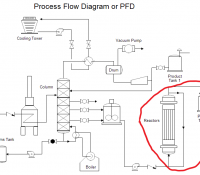
In February of 1992, the OSHA Process Safety Management (PSM) standard was issued. The official title is: ‘Process Safety Management of Highly Hazardous Chemicals.’ As its title implies, not every facility is covered by this rigorous standard. A process must contain highly hazardous, as defined by OSHA, chemicals above a certain weight threshold, again defined by OSHA. Notice that this is a process by process determination, so there could be certain processes at a manufacturing facility that are not covered by this standard situated beside other processes that are.
Read More

Type ofLoss

Not sure what you're looking for?
Browse All

Select Loss Category