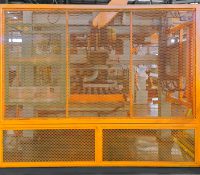
Two little letters, CE. Perhaps you have seen those two letters on a machine nameplate or some other equipment. What is the meaning behind those two stylized letters and how does it drive the design of safer machinery? Let’s take a closer look. Read More
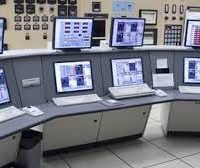
Wouldn’t it be great to have a built-in camera to let you see exactly what went wrong before an incident? In many manufacturing instances there is, chemical plants especially. The computer system that operates the plant is called a Distributed Control System (DCS) and it has the capacity to monitor thousands of process variables (flow rates, temperatures, pressures, levels, valve positions, pumps on/off) simultaneously. Read More
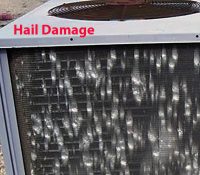
Hail property damage is frequently reported after an HVAC service call. Building owners are often unaware there is damage until the power bill starts trending higher and the HVAC system is simply not cooling effectively. Take look at the fins! The National Weather Service reported over $722 million in property damage from hail in 2018. Based on NWS data, hail caused more property damage than tornadoes or thunderstorms. Only Tropical Storms/Hurricanes at $12 billion, coastal storms at $1 billion and flooding at $1 billion were more costly than hail to property.
One of the items very susceptible to damage is the HVAC system. The heat that is removed from the interior of a building must be rejected to the environment. As such the HVAC system is placed where it can have unhindered access to outdoor air in order to function properly. This often results in the unit being placed in a large open space such as a rooftop, making it susceptible to damage such as hail. Read More
A wall is really boring until it fails. A retaining wall is supposed to hold back soil to either support a structure or keep a space clear. When it fails, both of those roles are compromised. A retaining wall does not have to collapse to fail. In fact, a failure is perhaps better defined as when the wall does not perform as expected. Read More
The Occupational Health and Safety Administration (OSHA) “Top 10 for 2018” violations once again have Machine Safeguarding earning a position on the list. Machine safeguarding was the 9th most cited standard as noted in the list below:
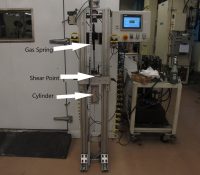
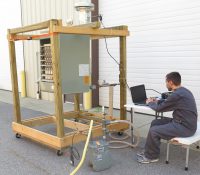
A worker was injured while testing gas springs similar to the type that hold the hatchback of an SUV open. The hazard that injured the worker was an unguarded shear point. The tester contained a mounting plate that was raised and lowered by a pneumatic cylinder.
The pneumatic cylinder lowered the mounting plate while the worker’s fingers were in the hazardous, unguarded shear point. Read More
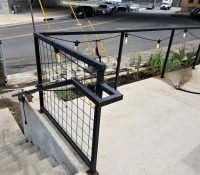
While on a lunch stop during a recent vacation trip through Tennessee, I happened across a safety hazard that required immediate attention. The establishment had a raised concrete patio at the front with a steel railing around the perimeter. At one edge of the patio was a set of stairs with a continuation of the steel railing used as a handrail. The top edge of the patio had light strings wrapping the top metal bar as accent lighting for the perimeter. The light string continued down the stair handrail wrapped in the same manner as the rest of the patio. Read More
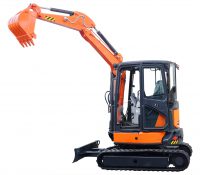
A mini-excavator at a job site developed a leak at a hydraulic fitting at the base of the cylinder that raises and lowers the boom. A subcontractor foreman at the site raised the boom to search for the leak. The foreman found and attempted to tighten the leaking fitting. When he did, the fitting separated from the base of the cylinder, releasing the hydraulic pressure that held the boom aloft. The boom fell and the bucket struck a nearby superintendent for the general contractor.
Equipment and appliances supplied with fuel gases like natural gas, propane and butane are a common and convenient part of most of our lives. Such devices as gas grills and ranges, ovens, furnaces, space heaters and water heaters usually perform without incident. However, when they malfunction the potential for incidents such as fires and explosions, carbon monoxide (CO) poisoning and burn injuries may occur. These incidents may be due to design and manufacturing defects in the product, or improper installation or operation of the device.
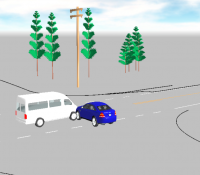
When it comes to diagramming a crash scene, there are several methods to accomplish the task. Forensic Mapping, (locating, positioning, and documenting the evidence of a collision scene to scale) is essential to having the answers to the questions “Who, What, Where, When, and Why?”. Photographs do a great job showing what the investigators saw post collision; yet they lack scale and the ability to describe pre-collision movement. Having a computer aided diagram (CAD) of the collision scene goes much further than the pictures can; here is why.
A scale diagram gives the full overview of a collision scene from either a 2D or 3D point of view. Being able to see how things lined up, how they came together and how they parted helps explain the events within a crash. When a scene can be viewed from top down or any angle, that helps relay the facts. The investigator, judge, or jury will get Read More