Forensic Engineers and Consultants

Category Archive: Tips and Advice

Not Your Father’s House Fire

Remember the good old days when our homes were built with only lumber, dry-wall, and roofing?   Me neither.  However, we talk about ‘modern’ construction materials like this is a new phenomenon.  The truth is ‘modern’ construction materials started sneaking into homes over fifty years ago.  It’s not only construction materials that have changed: a century ago, we furnished our houses with wood, cloth, metal, and glass. Today, it’s plastics, foams, and coatings.
Read More

Testing…testing… Is this thing on?

Author

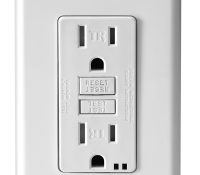
Many people just take for granted that something is just going to work, and in many cases assume that it will work forever.  One such device that does not get enough attention is the Ground Fault Circuit Interrupter (GFCI).   Simply put, a GFCI is a protective device that compares the current flowing on the hot and neutral wires of the circuit and will “trip” to disconnect power to the circuit if a small imbalance of current is detected.  The imbalance of current is an indication of a dangerous alternate path for the current to flow from a damaged line cord or a fault inside an appliance and constitutes a shock hazard to a person. Read More

Water Damage from Leaking Shower Stalls

Author

Have you ever had to have a leaking shower pan for a tiled shower stall replaced, only to have a recurrence a few years later? If so, it is likely that it was not properly built and/or repaired. In most installations, the shower stall is constructed with an underlying one-piece flexible membrane of PVC that is attached to the wall studs before the backer board and wall tile is installed. No nails or screws should penetrate the membrane below the level of the curb of the shower stall. The only opening in the membrane below the curb must be the hole for the shower drain to connect to the house plumbing. The shower drain is designed to allow water on top of the membrane to flow into the drain via weep holes for that purpose. Read More

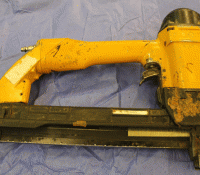
Should I Trust My Nail Gun?

Author

Can you imagine framing a house with the tools of our forefathers, using hand saws and hammers, rather than power saws and pneumatic nail guns? Power tools have made the job much easier and faster, that even the amateur is well equipped for this kind of work. Read More

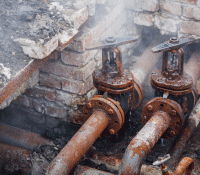
Graphitic Corrosion – Difficult to determine before a failure!

Author

Graphitic corrosion is a process that may happen in equipment made of iron, particularly grey cast iron, but also ductile cast iron. Graphitic corrosion can lead to unexpected catastrophic failure of the affected part because the cast iron can lose its strength without a visible warning such as a change in size, shape, or appearance. Read More

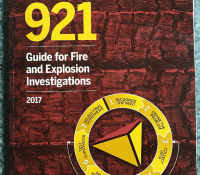
New 2017 Edition of NFPA 921 Guide for Fire and Explosion Investigations

Author

Over the course of its 25-year history, NFPA 921 Guide for Fire and Explosion Investigations has changed the practice of fire investigation for the better.  Without a doubt, NFPA 921 has appropriately driven a more rigorous approach to fire investigation that seeks to avoid cognitive bias and reliance on techniques that, when rigorously examined, are little more than pseudoscience.  One need look no further than the Cameron Todd Willingham matter, wherein a Texas man was executed in part based on a flawed fire investigation, to understand the importance of conducting a proper fire investigation. Read More

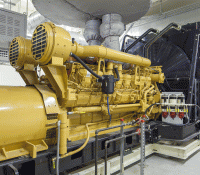
Are You Prepared for Emergencies? Your Generator Set Should Be!

Author

Emergency generators are often called into service during catastrophic events like hurricanes, floods, tornadoes or fires, but also during more mundane events like thunderstorms and other things that may temporarily interrupt the public power grid. Can you rely on your generator to perform at those critical times? Read More

Flood Damage to Electrical Equipment

Author

As a result of the recent weather, those of us in South Carolina have gained a renewed appreciation of the damage that can result from flooding. Even a few inches of flood water can result in property damage and a loss of services in addition to the immediate risk of physical harm. Read More

Air Conditioning Evaporators

Author

This is the third and final of three articles concerning the basics of air conditioning systems.  This article concerns the evaporator, a part of the air conditioning system that is usually unseen inside the air handling unit. The evaporator, in concert with a fan, supplies cool air to a building interior. Read More

Air Conditioning Condensing Units

Author

The condensing unit is a key component of all vapor compression air conditioning systems.  We are all familiar with condensing units as the noisy exterior portions of air conditioning systems that blow hot air to the environment. Read More

Type ofLoss

Not sure what you're looking for?
Browse All

Select Loss Category