Forensic Engineers and Consultants

Archive: Industrial

Using Historical Weather Data to Investigate Lightning Strike Claims

Author

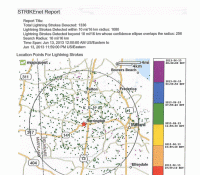
Property damage claims to sensitive electronic equipment due to a direct or nearby lightning strike are frequently difficult to substantiate to a high degree of confidence.  Electrical damage to common consumer electronic equipment (televisions, computers and accessories, wireless routers, telephones, fax machines, electronic security systems, etc.) is most frequently not visible to the naked eye during a physical inspection of the allegedly failed equipment.  So, how do we investigate an electrical loss when an insured claims he has $30,000 worth of non-functioning equipment? Read More
Electric Motors – The Electrical Work Horse of Industry

Author

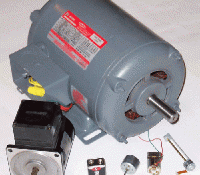
Electric motors are the work horses of the electrical industry. Their use is so pervasive in our industrial society that approximately 75% of electrical power sold to industry is used for the operation of electric motors. With so many electric motors in operation, it becomes imperative that they be utilized and maintained properly. A failed electric motor causes delays in production, which in turn impacts the bottom line. Read More

Walkway and Parking Lot Design and Maintenance Can Prevent Injuries

As an experienced safety consultant, I’m called to investigate a wide range of premises liability incidents. One common premises incident that often results in serious injury is a trip or a fall.
Read More

Design Can Prevent Industrial Accidents

Two of the top causes of workplace accidents, according to the United States Department of Labor’s Occupation Safety and Health Administration, are a lack of machine guarding and improper control of hazardous energy. At first blush, these types of incidents can mistakenly be attributed to an employee’s actions without considering how a machine’s design or the improper control of an environment or situation may have contributed.
Read More

Protecting Industrial Employees from Workplace Hazards

The recent Texas fertilizer plant explosion has focused the nation’s eyes on the important matter of workplace safety. When an employee is injured or killed on the job, Warren investigators are often called in to identify what went wrong and how it could have been prevented.
Read More

Concrete Core Drill – Reducing Hazard Exposure by Design

Author

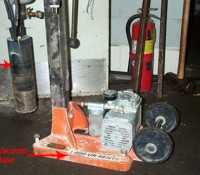
The safety hierarchy is a well-established principle among safety professionals. It’s a reliable and widely accepted method to minimize or eliminate exposure to hazards in products and workplaces.
Read More

Crane Balancing Act

Author

The operation of many cranes is a balancing act — one very similar to the childhood experience of using a playground seesaw. When the equipment isn’t properly balanced, the crane may succumb to the tipping force and fall to one side. Such a tipover is more common in mobile cranes rather than fixed-tower cranes.
Read More

Fire Investigation Points to Design Failure.

Author

Defects that cause problems in machines are categorized into two different concepts. Manufacturing defect is a term that applies to a situation where the defect was unintended. For example, a part was installed that did not meet the designer’s specifications or quality. A design defect is another matter. Design defect is a term that applies to a situation where the defect resulted from a purposeful decision or by failing to investigate or heed available design criteria on the part of a designer or builder. Read More

Machine Safeguarding for an Imperfect Workforce: Humans.

Every day more than 12 people in the United States lose their lives in workplace injuries, according to U.S. Department of Labor data. In 2011, OSHA estimates, 3.3 million people suffered a workplace injury from which they may never fully recover. Two of the top ten most frequently cited OSHA standards that result in injuries and death are lockout/tagout and machine guarding. Read More

Type ofLoss

Not sure what you're looking for?
Browse All

Select Loss Category