Forensic Engineers and Consultants

Category Archive: Safety and Design

Cross Cut Grooving in Walking Surfaces

As an experienced safety consultant, I am often called upon to investigate a wide range of premises liability incidents. One common type of incident that frequently results in serious injury is a fall on a painted walking surface.

The ASTM International Standard Practice for Safe Walking Surfaces, ASTM F1637, is a nationally recognized consensus standard that has existed for more than 30 years. It provides guidance to property owners and designers in the construction and maintenance of safe walking surfaces. The standard specifically addresses painted walking surfaces in Section 5.1.3.

ASTM F1637-21 states:

5.1.3 Walkway surfaces shall be slip resistant under expected environmental conditions and use. Painted walkways shall contain an abrasive additive, cross-cut grooving, texturing, or other appropriate means to render the surface slip resistant where wet conditions may be foreseeable.

In previous articles, I have discussed Read More

You’re Just Not My Type – Part 1: Guards

Author

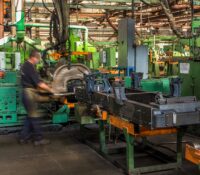
Selecting the best or most effective way to reduce or eliminate risk from a particular machine hazard is an extremely important process.  It can mean the difference between someone going home and hugging their wife and children…to never going home again.  The hazard control hierarchy (see figure below) is an available tool that illustrates what is known to be most effective to least effective when it comes to eliminating machine hazards or reducing the risk from those hazards to an acceptable level.  Removing the hazard by designing it out is by far most effective.  Read More
CHECK OUT THAT RACK! – The Importance of Inspecting Storage Racks for Proper Installation

Author

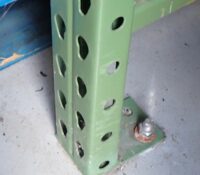
People have too much “stuff”. Manufacturers, retailers, wholesalers, and commercial enterprises all carry inventory of “stuff”, too. According to the Energy Information Administration’s (EIA’s) own statistics, in 2018, the US had over 17.4 billion ft2 of warehouse and storage. Growing from just 13 billion ft2 in 2012, warehouse and storage space is the fastest growing and now the largest use of commercial space in the US, overtaking office space for the first time in modern history.


Almost every one of those buildings contains storage racks. And this doesn’t include the mercantile spaces. You can go to a big box retailer and buy cereal from a lower shelf while pallets of grain or packaged drinks sit 20-30 feet above, waiting to be introduced to the customer.

There is no specific OSHA regulation for anchoring storage racks – Read More

KEEP the CHANGE?

Author

As we all know, change is a part of life.  Sometimes the results from change are good.  And we know sometimes change may result in things becoming worse, although it may not be immediately evident.  I think it is safe to say that when we intentionally make changes to something, our goal is to make it better with respect to one or more metrics.  Engineers working in manufacturing facilities are often asked to make changes to existing machines and processes for multiple reasons: Read More

Hidden Heat: The Unseen Hazard of a High Resistance Connection

Author

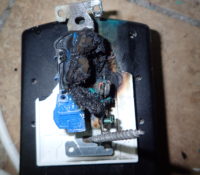
A typical residence can have upwards of 10,000 feet of electrical conductors installed, most of which are buried in the walls, attics and crawlspaces.  A commercial building can have 100,000 to upwards of 1 million feet of electrical conductors.  At each device such as a switch or a receptacle are at least three, and typically six or more connections of these conductors within a junction box.  The connections can be in the form of twisted connectors, screw terminals, push in terminals and crimped connectors.

Read More

Water Removal In Windows and Doors – Part 3: Sill Risers

Author

Welcome back to my multi-part series about water resistance in windows and doors. Last time we discussed weatherstripping. Today, we move on to a product common to sliding doors and coastal areas – sill risers.

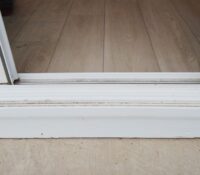
Sill risers offer a brute force way to reduce water infiltration when a LOT of water is expected to hit a fenestration product. Unlike weathersealing, buried drainage, or weep systems, sill risers block water by providing a dam. Coastal homes with wind driven rain frequently have sill risers. They are practical and require less maintenance than weep holes or buried drainage systems, plus Read More

Machine Guarding Resources

Author

So, you find yourself with a machine hazard that you need to guard.  Where do your turn for guidance regarding guards?  Several resources are available for the person who is tasked with providing machine guarding.

The United States government provides resources in the Code of Federal Regulations (CFR).  These can be found at www.ecfr.gov.  Title 29 of the CFR, section 1910 covers “General Industry” regulations.  1910 Subpart O, covers Machinery and Machine Guarding.  Definitions are covered in 1910.211 and it is wise to understand how terms are defined. For instance, in 1910.211(a)(1), Point of operations is defined by the regulation as “that point at which cutting, shaping, boring, or forming is accomplished on the stock.” Read More

Water Removal In Windows and Doors – Part 2: Weatherstripping

Author

Welcome back to my multi-part series about water resistance in windows and doors. Last time we discussed weep holes. Today, I’d like to talk about weatherstripping (also known as weathersealing).

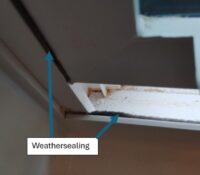
During the life of typical exterior fenestration products, every driven rain is a test of the product’s water weathersealing system. Most windows and doors handle water without much homeowner input, but racked or misaligned windows, poor weatherstripping corner joints, and torn piles all contribute to reduced water infiltration resistance. They can allow moisture into the structure, where damage to flooring, walls, and Read More

Don’t Get Burned With Your Gas Grill!

Author

If there is one thing Americans can agree upon, it is the enjoyment that comes from an outdoor barbeque.  Whether a summertime cookout or a fall BBQ to watch a football game, we all love the fun and fellowship that comes from sharing a meal that was prepared outdoors on a grill or smoker.  In fact, 64% of Americans own a grill or smoker.  The great majority of these are LP fueled gas grills with comparatively few natural gas fired grills.  These products can be enjoyed safely when designed, installed, and used in a proper manner.  However, given the grill’s use of flammable fuel gas and high temperatures, the potential exists for things to go wrong and result in burn injuries or uncontained fires that spread to the surroundings. Read More

Water Removal In Windows and Doors – Part 1: Weep Holes

Author

In architecture, the word fenestration is used to encompass the windows and doors in a building. During my twelve-year career as a design engineer in the fenestration industry, water infiltration resistance (I.E., stopping leaks) consumed almost as much time in the test lab as pressure or impact testing. During the life of typical exterior fenestration products, every driven rain is a test of the product’s water evacuation system. Most windows and doors handle water without much homeowner input, but poor, clogged or covered water drainage systems can allow moisture into the structure, where damage to flooring, walls, and molding may occur. Poor water infiltration resistance also increases the humidity in a living space. Read More

Type ofLoss

Not sure what you're looking for?
Browse All

Select Loss Category