Forensic Engineers and Consultants

Category Archive: Safety and Design

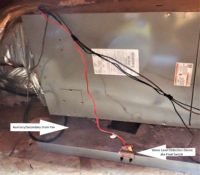
The Condensate System – An Important Item in Routine HVAC Maintenance

Author

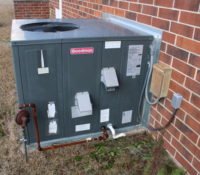
HVAC systems are almost everywhere in the United States now.  As a life-long resident of the humid south that grew up in a home without central air conditioning; I definitely appreciate the ability of a well-designed and maintained HVAC system to remove the oppressive summer humidity.

The very humidity that makes your clothes damp with sweat and hastened the invention of cooled leather seats in automobiles also has another route to create havoc…condensate.

In order for an HVAC or “air-conditioning system” to reduce the humidity in the air of your home or office it must first cool the air down to a point where the air can no longer keep the moisture in suspension as water vapor.  The moisture must condense… creating condensate.  This is what is happening when your cool beverage of choice “sweats” on the exterior of the container in the humid summer. Now that you have liquid water, as opposed to water vapor, this condensate must be directed out of your conditioned space to prevent water damage due to backed up or leaking condensate. Read More

What Does a Recovery Boiler Recover? – Quite a bit, actually!

The Kraft paper process was invented in 1879 and produces a stronger finished product that other paper manufacturing methods. One of the waste streams is known as black liquor and is a mixture of solids and water.  It contains lignin, hemicelluloses and chemicals used in the pulping process. The original process had no use for this harmful waste stream and it was dumped into nearby waterways, to their detriment!!!  Mr. G.H. Tomlinson invented the recovery boiler in the early 1930’s.  This development made the Kraft process the manufacturing method of choice, as explained below. Read More

In a Flash – The Transfer of Energies in Our Global Electrical System

Author

According to published weather data for the year 2019, 2.35 billion lightning strikes were recorded across the world, with 223 million of these in the United States.  The movement of atmosphere causes electrical charges to build up between clouds.  A tipping point is reached where the insulating properties of the air cannot withstand the level of energy and a discharge occurs.

Image Credit: Charleston Post and Courier. A lightning strike over Charleston, SC on July 3, 2019.

Read More

Improper Hearth Extension Leads to Structure Fire

Author

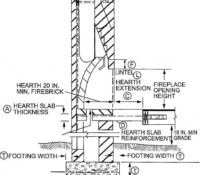
The fire service affords you the opportunity to witness and observe things that a lot of engineers and even most people do not get the chance to see.  An example of this is the situation where extended elevated temperatures combined with poor construction techniques to result in a structure fire.

I have personally observed several occasions where a structure fire was initiated due to improper construction of the fireplace hearth extension.  The most recent one followed a multi-day cold snap, at least by South Carolina standards.  The thermometer read 17 degrees F as I drove to the call of smoke in a residence Read More

Proper Construction and Maintenance Can Prevent Deadly Chimney Fires

Author

Burning Fireplace

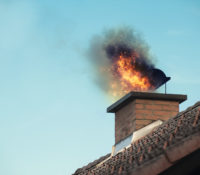
There are few things as comforting to me during the winter months as a warm fire burning in the fireplace.  And in this case, I am talking the real deal, the kind that warms you multiple times; from cutting, splitting and stacking the firewood until finally lighting a fire in the fireplace.  However, just like your parents taught you, fire can be dangerous.  And having an actual fire in your home fireplace comes with some required maintenance to ensure you can safely control the fire and keep it where it belongs. Read More

Residential Structure Fires

Author

The winter season is well underway in the United States, with the Christmas and New Years holidays behind us and the depths of cold weather here for the duration.  With winter, many people spend more hours indoors as compared to the summer when outdoor activities ramp up.  With more time spent indoors, it is somewhat intuitive that the use of electricity would increase as well.

Electricity is one of the most influential utilities in our daily life.  Much of what modern societies rely on to get through a normal day requires electricity.  Have you ever been in a slight panic looking for an electric outlet when your cell phone is below 10% charge?  Or how many times do we all attempt to turn on a light switch when we enter a room during a known power outage from sheer habit?  Even our personal transportation which has relied on gasoline for roughly 100 years is shifting toward electric automobiles. Read More

Heating System Losses, Part One

Author

When fall and winter arrive and temperatures drop, it is a great comfort to have a heating system to warm your home or office. Several categories of heating equipment exist to provide both primary and secondary heating. Primary heating systems include fuel gas/fuel oil/electric forced air furnaces, heat pumps, hydronic heating/steam systems and even wood-fired heating systems.  Secondary heating equipment includes electric, gas and kerosene space heaters of both fixed and portable design, and fireplaces. Each of the different types of heating systems have unique hazards that, uncontrolled, can result in fires, explosions, burn injuries, and carbon monoxide poisoning.  Read More

Staying Connected on the Loop: Two by Two’s Mobile Internet Setup

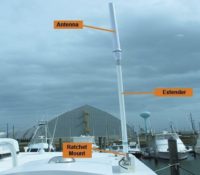
After completing the sit-stand workstation in the guest stateroom of our 47’ Nova Scotia pilothouse trawler, Two by Two, that I reported in a previous blog, I found I needed an internet connection with reasonable speed and reliability.  While almost every marina will give you a password for their WiFi, the quality of most marina connections is unreliable and too slow to effectively work as a forensic engineering consultant. When I tried to download a simple photograph through any type of remote connection to the Irmo, SC office, I could go make a cup of coffee and come back before the download finished.  To upload a group of photographs Read More

The Role of Interlocking Guards in Injury Prevention

Author

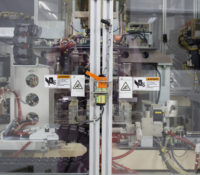
In the three-part series on the CE mark, we scratched the surface of some of the requirements an equipment manufacturer must meet in order to earn this designation. Part three of the series dealt with some of the requirements for the design of a guard.  One of the items for consideration with the design of a guard is the frequency that someone will need to access the area protected by the guard.  If access is needed on a routine basis, often defined as more than once per shift, the guard needs to be designed to be movable instead of fixed.  Movable is defined as able to be opened without the use of tools.  Otherwise the frustration and time requirements of obtaining tools and removing a fixed guard will often lead to the guard being discarded. Read More

What You May Not Know About Using a Concrete Test Hammer

Author

When assessing potential problems in concrete structures, consider a non-destructive test using the concrete test hammer, AKA “rebound hammer,” before investing a lot of time and money needlessly replacing or destructively testing the concrete structure.  The use of rebound hammer tests should be considered before you or your client decide to drill multiple core samples. Large areas of the concrete structure suspected of having potential strength problems can be tested quickly with a rebound hammer.  Analysis of those results can narrow down specific areas for more rigorous testing. Read More

Type ofLoss

Not sure what you're looking for?
Browse All

Select Loss Category