Forensic Engineers and Consultants

Archive: Commercial

The CE Mark and What Should It Mean to You? Part Two

Author

In the previous blog (Part One) we discussed the backstory behind the two stylized letters CE and what it means to the design of machinery bearing the mark.   We outlined some of the requirements of the “Machinery Directive” (MD) which include what are known as “Essential Health and Safety Requirements.” The Essential Health and Safety Requirements incorporate an iterative risk reduction process during design that takes into account Read More
Construction Techniques to Prevent Water Penetration at Windows

Author

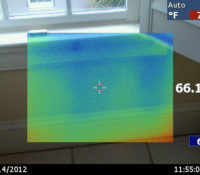
Windows, and their interface with the exterior walls, are an important part of a building’s envelope that resists the intrusion of water. Most builders take many precautions to protect a house from water damage. One of the most important factors in keeping the water out is the installation of window flashing, a thin material that prevents water from seeping in around a window. Read More

Ammonia

Ammonia – The Good, The Bad, The Smelly… Part One

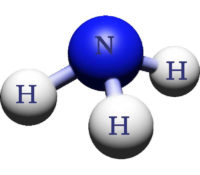
Ammonia is a compound consisting of one nitrogen atom and three hydrogen atoms and is denoted by the formula NH3. Its boiling point is -28°F at atmospheric pressure, so unless it is under pressure, it is gaseous at room temperatures. Therefore, pure ammonia is typically stored under pressure in a liquid form. Household ammonia is only 5-10% NH3, the remaining 90-95% is water. Ammonia is extremely soluble in water. It is often depicted  like this: Read More

The CE Mark and What Should It Mean to You? Part One

Author

Two little letters, CE.  Perhaps you have seen those two letters on a machine nameplate or some other equipment.  What is the meaning behind those two stylized letters and how does it drive the design of safer machinery?  Let’s take a closer look. Read More

Failure to Maintain Tow Hook Latch Results in Bystander Death

Author

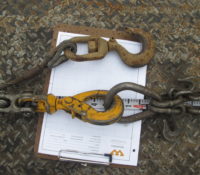
An unfortunate and tragic case that we investigated involved a commercial “rollback” recovery truck that was being used to transport a four-wheel drive diesel pickup.  The diesel pickup was not in running order with its’ engine in the bed of the truck.  Consequently, a commercial towing company was hired by the truck owner to transport the truck.  In the process of loading the truck onto the rollback, the truck came uncoupled from the winch and cable system.  The truck then rolled down the inclined bed of the rollback, running over and killing a bystander. Read More

Why the Structural Load Path MUST be Considered During Renovation to Prevent Property Damage

Author

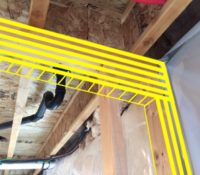
Understanding the structural load path is imperative when considering renovations in a home that may require the removal of a load-bearing wall. Some homeowners consider adding a new door or window opening and worry if the structure will collapse. Another reason could be that the owner wants an open concept floor plan. The goal is to remove walls and open their living space. Read More

Water in the Light Fixtures??? How HVAC Defects Appear in Strange Places

Author

One of my more interesting calls and subsequent forensic investigations was regarding water accumulating inside of 2X4 fluorescent light fixtures in a suspended ceiling of a secondary school in South Carolina.

The client called and indicated that the metal chassis of the lights were sweating and generating enough water to accumulate on the diffuser lens of the lights.  Obviously, an on-site investigation was in order! Read More

When the Walls Come Tumbling Down… Retaining Wall Basics

Author

A wall is really boring until it fails. A retaining wall is supposed to hold back soil to either support a structure or keep a space clear. When it fails, both of those roles are compromised. A retaining wall does not have to collapse to fail. In fact, a failure is perhaps better defined as when the wall does not perform as expected. Read More

Machine Guarding and Risk Assessment

Author

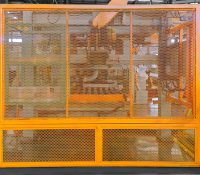
The Occupational Health and Safety Administration (OSHA) “Top 10 for 2018” violations once again have Machine Safeguarding earning a position on the list. Machine safeguarding was the 9th most cited standard as noted in the list below:

  1. Fall protection, construction (29 CFR 1926.501)
  2. Hazard communication standard, general industry (29 CFR 1910.1200)
  3. Scaffolding, general requirements, construction (29 CFR 1926.451)
  4. Respiratory protection, general industry (29 CFR 1910.134)
  5. Control of hazardous energy (lockout/tagout), general industry (29 CFR 1910.147)
  6. Ladders, construction (29 CFR 1926.1053)]
  7. Powered industrial trucks, general industry (29 CFR 1910.178)
  8. Fall Protection–Training Requirements (29 CFR 1926.503
  9. Machinery and Machine Guarding, general requirements (29 CFR 1910.212)
  10. Eye and Face Protection (29 CFR 1926.102)

(Source: www.osha.gov/Top_Ten_Standards.html)

Read More

Unguarded Shear Point on Force Tester Amputates Worker’s Finger

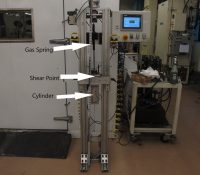
A worker was injured while testing gas springs similar to the type that hold the hatchback of an SUV open. The hazard that injured the worker was an unguarded shear point. The tester contained a mounting plate that was raised and lowered by a pneumatic cylinder.

The pneumatic cylinder lowered the mounting plate while the worker’s fingers were in the hazardous, unguarded shear point. Read More

Type ofLoss

Not sure what you're looking for?
Browse All

Select Loss Category