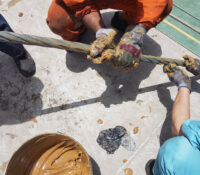
Wire ropes are critical components of cranes and play a crucial role in ensuring the safety and efficiency of crane operations. To extend the life of these ropes and maintain their strength and performance, it is essential to regularly lubricate them. Read More
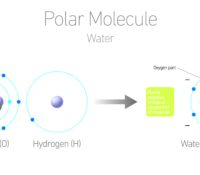
Around Christmas day of 2022, a mass of very cold air settled in the deep south/southeastern United States (where I live). It remained below freezing for over 24 hours. That is very unusual down here. There was a spate of burst pipes all over the area. Why? Water is one of a very few compounds that expands when it freezes…by approximately 9%!! If a volume of water is sealed off in a section of piping, and that water freezes, it is likely the pipe will rupture. Then, when it warms up again and thaws, liquid water will leave the pipe for an adventure!! Read More
An alarming 6,516 pedestrians were killed, and 54,769 pedestrians were injured as a result of traffic crashes in 2020 (NHTSA, 2022). A large majority (77%) of these pedestrian fatalities occurred in low luminance conditions such as nighttime while only 20% occurred in daylight (NHTSA, 2022). This dramatic difference between pedestrian fatalities during the night and day is seen even when controlling for driver fatigue and alcohol consumption (Owens & Sivak, 1996). This phenomenon prompts the question as what is so dangerous about being a pedestrian at night? Read More
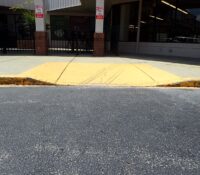
As an experienced safety consultant, I am called on to investigate a wide range of premises liability incidents. One common premises liability incident that often results in serious injury is a fall on a painted walking surface.
Slip and fall accidents can be devastating, causing serious injuries and even death. To prevent these accidents, it is important to ensure that walking surfaces, including painted ones, are slip-resistant. In this article, we will discuss the various methods for treating painted walking surfaces to make them slip-resistant. Read More
In Part 1, we looked at the basic parts of a fire sprinkler and took a closer look at other parts including heat responsive elements, wrench bosses, and kick springs. In this part, we’ll look at k-factors and deflectors.
K-Factor and Orifice Size
K-factor is a characteristic that relates water pressure to flow rate from the sprinkler, represented as k in the equation Q = k√P, where Q is flow (gpm) and P is pressure (psi).
If we supply water at 50 psi to a k-factor 5.6 sprinkler, the flow rate is 40 gpm. If we supply 50 psi water to a K25 sprinkler, the flow rate is 177 gpm. There are now sprinklers as large as K33.6, which would flow 238 gpm given 50 psi – big difference from the K5.6!
The most common k-factors are 5.6, 8.0, 11.2, 14, 16.8, 22.4 and 25. There are smaller and larger k-factors than these. For reference, K5.6 and possibly K8.0 are most often found in Read More
As an experienced safety consultant, I’m called on to investigate a wide range of premises liability incidents. One common premises liability incident that often results in serious injury is a fall on an improperly painted or maintained walking surface.
Slip and fall accidents are a common occurrence and can lead to serious injuries and even death. Painted surfaces are one of the most Read More
Visibility aids, such as lighting, reflectors, and fluorescent material, are marketed to vulnerable road users (VRUs) like pedestrians and bicyclists as a way to enhance their safety on the road. These visibility aids increase the VRU’s contrast within the roadway environment therefore increasing their visibility. However, increasing visibility does not necessarily mean enhancing conspicuity. For example, the key difference between a visible pedestrian and a conspicuous pedestrian is that a visible pedestrian is distinguishable from their background whereas a conspicuous pedestrian “grabs” the driver’s visual attention. Read More
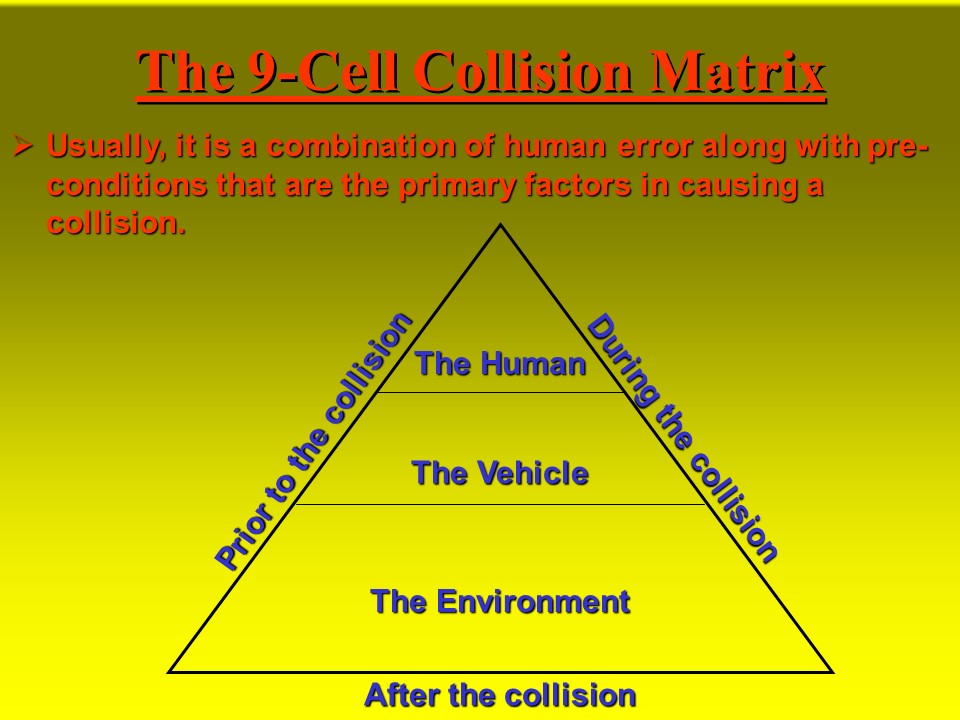
Murder, suicide, deceit, and intrigue… car crashes? You bet! In our next installment of the 9-Cell Collision Matrix let us dive a little deeper into the glue that binds all this together, the human element.
Photo by Mark Turner
Let’s begin with the most basic human element at the root cause of car wrecks, our old friend inattention. Inattention… a vast word that encompasses many lackadaisical conditions. The daydreaming 16-year-old in math class, the radio knob turner, the back seat talker, the quarter pounder with cheese eater, and perhaps the most offensive, the cell phone user. All very dangerous behind the wheel, and one very dangerous to your future… as it turns out, you will always need good math skills… ask me how I know? Driving is of course a divided attention endeavor, Read More
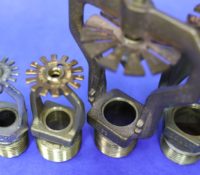
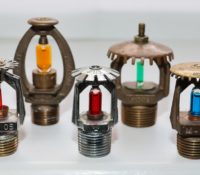
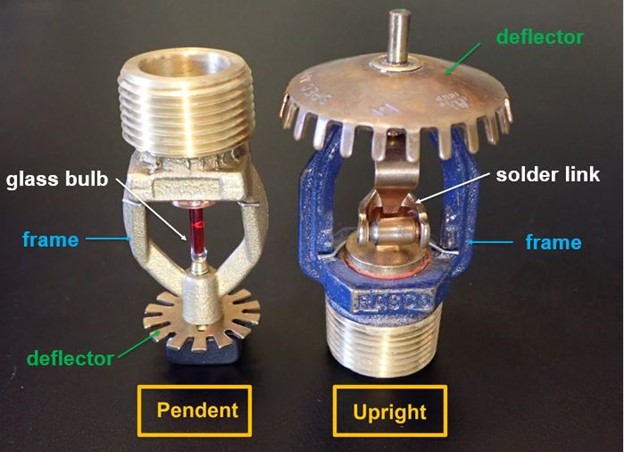
In this blog we’ll take a look at the basic and some of the less-known parts of fire sprinklers, with more to come in a later post.
Here are the basic parts of the fire sprinkler, shown on a pendent glass bulb sprinkler and an upright solder element (“fusible link”) sprinkler:
Let’s take a closer look to learn about some of the less known parts, and also look at two types of sprinklers disassembled. Included in parentheses are some of the different names for some of these parts. Read More
As the Holiday Season approaches in the United States, it is a good time to take a look at several ways that the festivities can go awry.
For people that have cool or cold weather during winter, the thought of a warm, cozy home can be very comforting. However, many of the things that come to mind can turn the season on its head very quickly. Candles are a great example of a decorating trend with potentially serious side effects. The good folks at the National Fire Protection Association (NFPA) tell us that more than one-third of home decoration fires are started by candles, with more than two of every five decoration fires occurring because decorations were placed too close to a heat source. One fire I responded to as a firefighter occurred because Read More