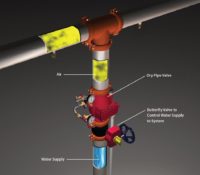
In the previous blog , I discussed the most basic and most common fire system type: wet sprinkler systems. The possible failure areas discussed with wet systems will also apply to dry sprinkler systems (control valves closed, obstructions, issues in the system, installation, or deficiencies with inspection, testing, and maintenance). Dry systems are even more prone to obstructions than wet systems, so close attention should be paid to that possibility. Read More
Machine guards can be compared to the clothes we wear every day. Indeed, they serve a very important purpose. Imagine someone leaving their home on a fine, sunny morning wearing nothing but a smile. Wonder how far they will get through the day before things start going poorly for this individual?
There will be more than a few raised eyebrows and blushes when he stops into the local Starbucks for his usual morning double-dipped and whipped, chocolaty chip with a touch of pumpkin spice cappuccino fix. Good luck with that! Probably going to leave disappointed, empty-handed, and likely wearing handcuffs. This will be the beginning of a very long, very bad day for that individual. Had he recognized the risks associated with this type of behavior, and then put forth a little effort to cover up, he would have prevented many unfavorable and possibly life-changing personal and legal problems from ever occurring!
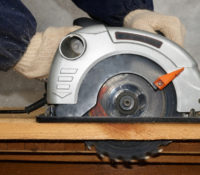
And so it is with properly guarding a machine. Machine safeguarding helps to protect workers from preventable injuries. Read More
Forensic engineers may be called upon to investigate a broad array of problems concerning a machine. Cases involving physical injuries and even death are a large part of what we investigate in order to determine what caused the accident to happen and who may be at fault. Occasionally, problems with a recently designed custom machine do not cause a physical injury, but instead cause a “financial” injury. This type of “injury” can negatively impact the machine designer, the machine purchaser, or possibly both. Financial injuries can be quite substantial, just as physical injuries can be, and may severely impact a company’s cash flow which can make or break a company. A refusal to pay a designer/builder of a machine or paying for a machine that ends up not meeting the agreed upon performance specifications can have catastrophic consequences for many businesses, especially for small ones. Read More
After a major fire, it is necessary to investigate the fire sprinkler system to see if and why it malfunctioned. Wet sprinkler systems are the most common and least complex fire sprinkler systems in use. The following are major items addressed in an investigation involving a wet system.
If available, drawings of the supply piping and sprinkler system are helpful. If these are not available, a sketch of the system will be made. Requests will also be made for inspection, testing, and maintenance documentation as well as fire alarm logs.
The top reason that fire sprinkler systems do not function correctly during a fire is Read More
The adequacy of a crane’s load line to support the weight of the object being lifted is an obvious concern when evaluating a crane lifting operation. Less obvious, but often equally important, is the presence and adequacy of taglines to provide control of the load orientation.
Taglines are simply ropes or lines that are Read More
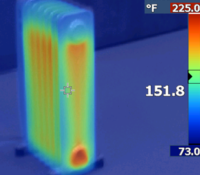
Previously, Warren posted the first installment of a series on losses associated with heating systems. The first article looked at central forced air furnaces. This new article will look at a common form of supplemental or secondary heat, oil filled electric radiant heaters. These heaters are commonly used to provide extra heating in areas that are lacking in central heating capacity. Another rationale for their use arises from manufacturer’s claims that the portable heating units can lower your power bill. This is based on Read More
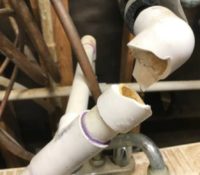
An unexpected severe winter freeze will remind many people and businesses that when water in a pipe freezes, the ice will expand and burst the pipe or pipe fitting. Large losses will result from flooding when the temperatures rise. Insulation will help, but not prevent freezing. Insulation simply slows down the rate of heat loss. The time of exposure to subfreezing temperature is an important factor.
The American Society of Refrigeration and Air Conditioning Engineers (ASHRAE) Handbook of Fundamentals has a short entry on the topic (Chapter 23, page 23.5-6), which gives an equation for estimating the time that it will take an insulated pipe to freeze, Read More
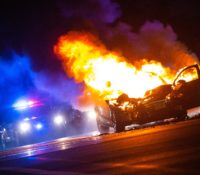
“On average, U.S. fire departments responded to a highway vehicle fire every 182 seconds,” according to the NFPA’s Fire Loss Facts Sheet.
The National Fire Protection Association (NFPA) says that vehicle fires account for about 20 percent of all reported fires. Before I attempt to examine a vehicle fire loss, I like to check various consumer and government agencies websites to see if I can find any recall or historical data that might be important. This is true for heavy truck fires all the way to automobile and motorcycle fires. Read More
Temporary wiring is just that….temporary, and is typically used for repair and maintenance projects. In this blog I am going to discuss guidance offered by Article 590 of the National Electric Code (NEC), as well as some points to consider when using temporary wiring, including extension cords and holiday lighting.
Before each use, extension cords need to be inspected for visual damage. Cords with cuts or splits to the insulation need to be discarded. Cords with damage to the connectors, including those that feel loose when connected, need to be taken out of service. Failure to properly select and use extension cords can have a catastrophic result. Read More
At Warren, we frequently investigate losses involving industrial machinery. Many of the losses involve workplace injuries, fires, or explosions; however, we also analyze industrial machinery and processes for other types of problems. For example, we analyze failures of machinery or industrial processes to perform as expected or disputes that arise from the commercial supply and construction of such systems. This can encompass a range of issues from failure to achieve required levels of product quality or production quantity, to matters concerning unclear specifications or contracts, Read More