Forensic Engineers and Consultants

Category Archive: Tips and Advice

Heavy Machinery Fires Caused by Hydraulic Hose Failures

Author

Heavy machinery fires are often caused by hydraulic hose failures.  Pressurized hydraulic fluid escaping from a failed hose assembly can be atomized into a fine spray that can be ignited by heated engine surfaces such as the engine exhaust or turbocharger.
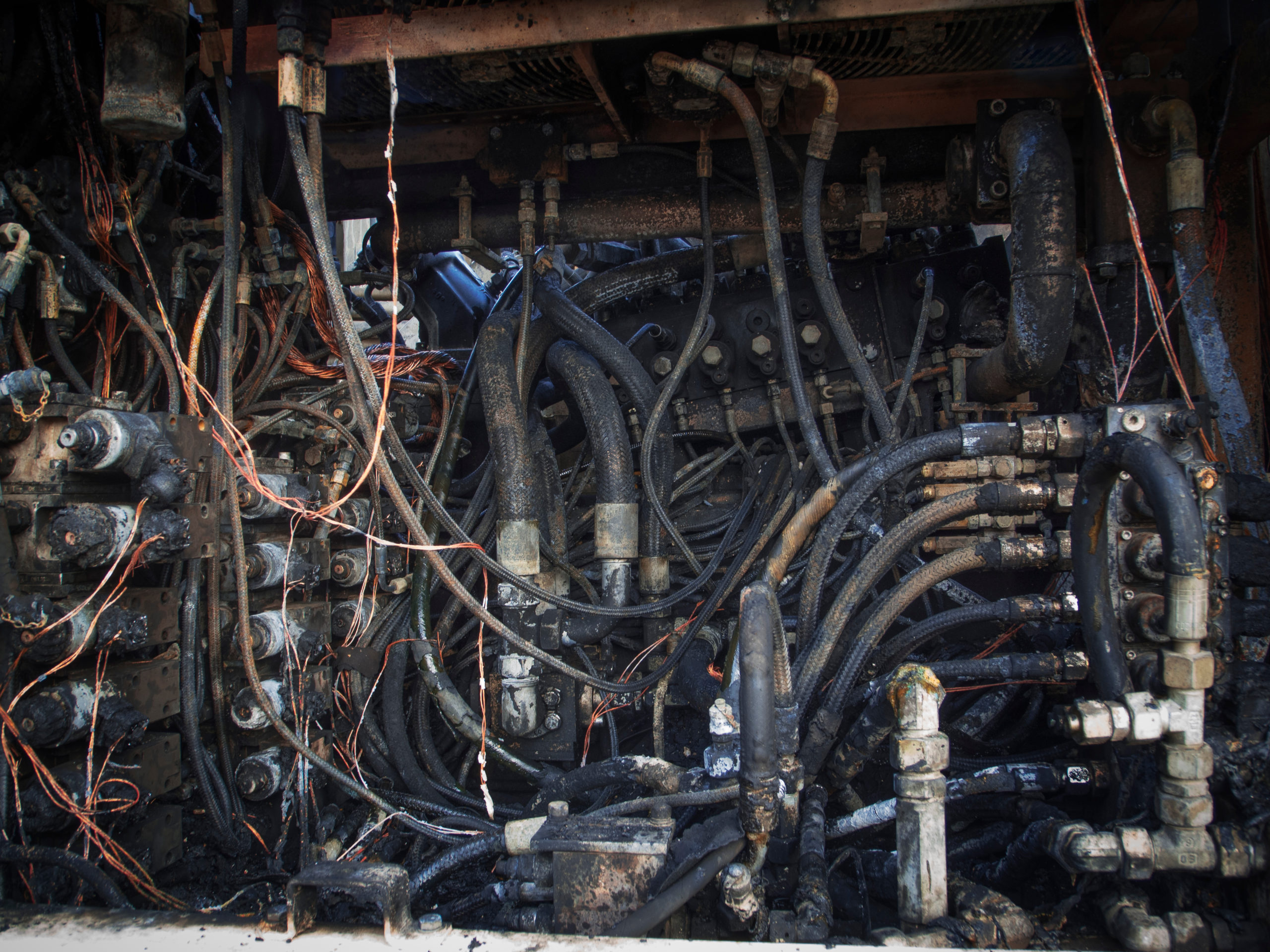
Hydraulic hoses near the engine compartment of an excavator that burned.


Hydraulic hoses often fail due to age and wear, requiring regular inspection and replacement of hydraulic hoses to prevent failures. Hoses may also fail if they are misrouted.  Misrouting can lead to the hose being pinched or causing it to chafe against a sharp metal surface. Read More

Interpreting Industrial Incident Data – Lesson Learned

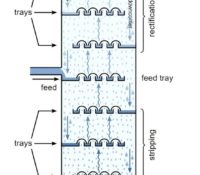
This is a case study about an incident I investigated involving a major upset in a distillation column.  This blog builds on the previous blogs about the Distributed Control System, DCS – Data is the Key.

Distillation is a method of separating mixtures of compounds with differing boiling points.  Uncle Bill with his still on the hill separates ethanol, that boils at 173°F, from water that boils at 212°F.  If the mixture is heated to above 173°F, but below 212°F, the ethanol will boil, the vapor will travel up out of the unit and then can be condensed and served over ice with an olive…   Any mixture of two or more chemicals with different boiling points can be separated in this way.  The distillation Read More

TVSS or SPD … Can I Buy a Vowel? Understanding Surge Protection and the Changing Requirements

Author

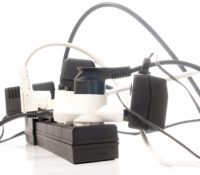
Surge Protective Devices (SPD), formerly known as Transient Voltage Surge Suppressors (TVSS) have been around for a long time.   The most recognized version is integrated into outlet strips and used to protect sensitive electronics from surges, or higher than expected voltages on the power line.  Early versions of these surge strips were known to have problems where internal components could overheat and cause a fire.  Thermal protection was added to the designs to greatly reduce the potential for a fire hazard.  Such an implementation in an outlet strip is considered a Type 3 SPD. Read More

Heat Exchanger Failures Will Shut Your Process Down

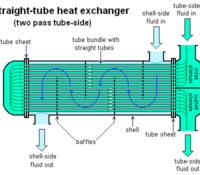
Heat exchangers, as the name implies, are used to bring a process stream to a desired temperature.  They can heat or cool either gases or liquids. They are fairly intricate in their construction, therefore not the cheapest piece of equipment to purchase.  For that reason, facilities don’t keep “spare” exchangers lying around, so when they fail catastrophically, the entire manufacturing process goes down with them… and stays down until they are fixed or replaced. Ow!

Read More

Major Causes of Wood Truss Failures

Author

Wood truss failures can vary and identifying the cause requires visual inspection as well as a working knowledge of the structural loads and building codes. These truss systems must transfer the gravity and lateral loads to the foundations. Consequently, the framing system and the foundation provide strength and stability for a structure. The most common type of wood-framed construction uses roof trusses, exterior and interior load-bearing walls, beams, girders, posts, and floor framing to resist the gravity and vertical loads. This type of wood-framed construction engages a system of horizontal diaphragms (roof and floors) and shear walls (vertical exterior sheathed walls) to resist the lateral loads. Read More

Stress Corrosion Cracking of Stainless Steel in Marine Environments

Author

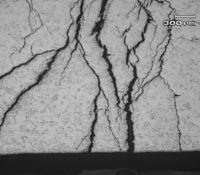
Stress corrosion cracking involves the slow growth of small, often microscopic, cracks through a metal part in a corrosive environment.  The cracking can continue to the point that the part fails suddenly and unexpectedly even though it still appears new and in good condition.

My first experience with stress corrosion cracking happened in the Charleston harbor when the stainless steel rudder suddenly separated from a sailboat during moderate winds. What had been a pleasant evening sail turned instantly into being in a difficult to control boat in the middle of the busy shipping channel. The rudder remained attached only Read More

Residential Structure Fires

Author

The winter season is well underway in the United States, with the Christmas and New Years holidays behind us and the depths of cold weather here for the duration.  With winter, many people spend more hours indoors as compared to the summer when outdoor activities ramp up.  With more time spent indoors, it is somewhat intuitive that the use of electricity would increase as well.

Electricity is one of the most influential utilities in our daily life.  Much of what modern societies rely on to get through a normal day requires electricity.  Have you ever been in a slight panic looking for an electric outlet when your cell phone is below 10% charge?  Or how many times do we all attempt to turn on a light switch when we enter a room during a known power outage from sheer habit?  Even our personal transportation which has relied on gasoline for roughly 100 years is shifting toward electric automobiles. Read More

Heating System Losses, Part One

Author

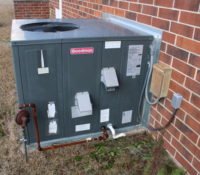
When fall and winter arrive and temperatures drop, it is a great comfort to have a heating system to warm your home or office. Several categories of heating equipment exist to provide both primary and secondary heating. Primary heating systems include fuel gas/fuel oil/electric forced air furnaces, heat pumps, hydronic heating/steam systems and even wood-fired heating systems.  Secondary heating equipment includes electric, gas and kerosene space heaters of both fixed and portable design, and fireplaces. Each of the different types of heating systems have unique hazards that, uncontrolled, can result in fires, explosions, burn injuries, and carbon monoxide poisoning.  Read More

P&ID’s, If You Please – Piping and Instrumentation Diagrams Explained

When investigating an industrial incident, one piece of information I always ask for is the relevant P&ID’s for the process.  P&ID stands for Piping and Instrumentation Diagram and is defined as “A schematic diagram of the relationship between instruments, controllers, piping, and system equipment.” A set of P&ID’s for an entire facility allows you to trace the entire manufacturing process from raw material unloading to finished product loadout, including utilities like steam, water, fuel, and air. That’s great information to have, but isn’t especially useful Read More

The Paths of Chemical Exposure

The Safety Hierarchy states that hazards should be mitigated first by engineering controls, secondly by guarding, and lastly by warning/training.  When the first two, engineering controls and guards, fail in a manufacturing setting, a chemical release could occur. A forensic chemical engineer can help determine the root cause of that failure. Read More

Type ofLoss

Not sure what you're looking for?
Browse All

Select Loss Category