Forensic Engineers and Consultants

blog

What Does a Recovery Boiler Recover? – Quite a bit, actually!

The Kraft paper process was invented in 1879 and produces a stronger finished product that other paper manufacturing methods. One of the waste streams is known as black liquor and is a mixture of solids and water.  It contains lignin, hemicelluloses and chemicals used in the pulping process. The original process had no use for this harmful waste stream and it was dumped into nearby waterways, to their detriment!!!  Mr. G.H. Tomlinson invented the recovery boiler in the early 1930’s.  This development made the Kraft process the manufacturing method of choice, as explained below. Read More

WARREN WEBINAR: Property Claims Issues at Manufacturing Facilities

Author

LIVE WEBINAR: “Property Claims Issues at Manufacturing Facilities” | Presented by WARREN’s President and Senior Consulting Engineer, Jennifer Morningstar, P.E., CFEI.

COURSE LEARNING OBJECTIVES
The learning objectives of this course are to provide the attendees with information on the four major facets of property claims that are commonplace in manufacturing facilities.

They are:

  1. Subrogation against third parties;
  2. Boiler & machinery vs property claims;
  3. Scope of loss, and
  4. Business interruption

Each facet will be explored and exemplified by at least one case study.

Read More

In a Flash – The Transfer of Energies in Our Global Electrical System

Author

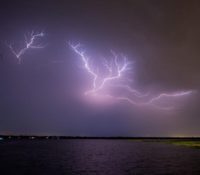
According to published weather data for the year 2019, 2.35 billion lightning strikes were recorded across the world, with 223 million of these in the United States.  The movement of atmosphere causes electrical charges to build up between clouds.  A tipping point is reached where the insulating properties of the air cannot withstand the level of energy and a discharge occurs.

Image Credit: Charleston Post and Courier. A lightning strike over Charleston, SC on July 3, 2019.

Read More

Congratulations Tom Kelly on CESCP Certification!

Author

Congratulations to Tom Kelly for completing his Certified Electrical Safety Compliance Professional designation. The National Fire Protection Agency (NFPA) program, CESCP, is designed to meet the needs of electrical and safety professionals who oversee electrical safety programs or who manage electricians and other personnel exposed to electrical hazards.

Read More

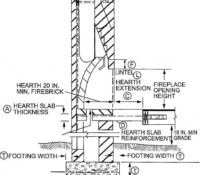
Improper Hearth Extension Leads to Structure Fire

Author

The fire service affords you the opportunity to witness and observe things that a lot of engineers and even most people do not get the chance to see.  An example of this is the situation where extended elevated temperatures combined with poor construction techniques to result in a structure fire.

I have personally observed several occasions where a structure fire was initiated due to improper construction of the fireplace hearth extension.  The most recent one followed a multi-day cold snap, at least by South Carolina standards.  The thermometer read 17 degrees F as I drove to the call of smoke in a residence Read More

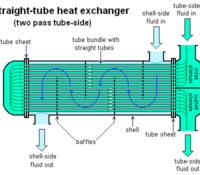
Heat Exchanger Failures Will Shut Your Process Down

Heat exchangers, as the name implies, are used to bring a process stream to a desired temperature.  They can heat or cool either gases or liquids. They are fairly intricate in their construction, therefore not the cheapest piece of equipment to purchase.  For that reason, facilities don’t keep “spare” exchangers lying around, so when they fail catastrophically, the entire manufacturing process goes down with them… and stays down until they are fixed or replaced. Ow!

Read More

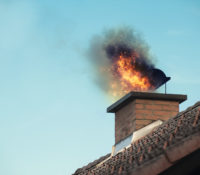
Proper Construction and Maintenance Can Prevent Deadly Chimney Fires

Author

Burning Fireplace

There are few things as comforting to me during the winter months as a warm fire burning in the fireplace.  And in this case, I am talking the real deal, the kind that warms you multiple times; from cutting, splitting and stacking the firewood until finally lighting a fire in the fireplace.  However, just like your parents taught you, fire can be dangerous.  And having an actual fire in your home fireplace comes with some required maintenance to ensure you can safely control the fire and keep it where it belongs. Read More

Major Causes of Wood Truss Failures

Author

Wood truss failures can vary and identifying the cause requires visual inspection as well as a working knowledge of the structural loads and building codes. These truss systems must transfer the gravity and lateral loads to the foundations. Consequently, the framing system and the foundation provide strength and stability for a structure. The most common type of wood-framed construction uses roof trusses, exterior and interior load-bearing walls, beams, girders, posts, and floor framing to resist the gravity and vertical loads. This type of wood-framed construction engages a system of horizontal diaphragms (roof and floors) and shear walls (vertical exterior sheathed walls) to resist the lateral loads. Read More

Stress Corrosion Cracking of Stainless Steel in Marine Environments

Author

Stress corrosion cracking involves the slow growth of small, often microscopic, cracks through a metal part in a corrosive environment.  The cracking can continue to the point that the part fails suddenly and unexpectedly even though it still appears new and in good condition.

My first experience with stress corrosion cracking happened in the Charleston harbor when the stainless steel rudder suddenly separated from a sailboat during moderate winds. What had been a pleasant evening sail turned instantly into being in a difficult to control boat in the middle of the busy shipping channel. The rudder remained attached only Read More

Residential Structure Fires

Author

The winter season is well underway in the United States, with the Christmas and New Years holidays behind us and the depths of cold weather here for the duration.  With winter, many people spend more hours indoors as compared to the summer when outdoor activities ramp up.  With more time spent indoors, it is somewhat intuitive that the use of electricity would increase as well.

Electricity is one of the most influential utilities in our daily life.  Much of what modern societies rely on to get through a normal day requires electricity.  Have you ever been in a slight panic looking for an electric outlet when your cell phone is below 10% charge?  Or how many times do we all attempt to turn on a light switch when we enter a room during a known power outage from sheer habit?  Even our personal transportation which has relied on gasoline for roughly 100 years is shifting toward electric automobiles. Read More

Type ofLoss

Not sure what you're looking for?
Browse All

Select Loss Category