Forensic Engineers and Consultants

blog

Taking a Practical Approach to Vehicle Fires

Author

“On average, U.S. fire departments responded to a highway vehicle fire every 182 seconds,” according to the NFPA’s Fire Loss Facts Sheet.

The National Fire Protection Association (NFPA) says that vehicle fires account for about 20 percent of all reported fires. Before I attempt to examine a vehicle fire loss, I like to check various consumer and government agencies websites to see if I can find any recall or historical data that might be important. This is true for heavy truck fires all the way to automobile and motorcycle fires. Read More

T is for Temporary – Issues with Extension Cords and Other Temporary Wiring Applications

Author

Temporary wiring is just that….temporary, and is typically used for repair and maintenance projects.  In this blog I am going to discuss guidance offered by Article 590 of the National Electric Code (NEC), as well as some points to consider when using temporary wiring, including extension cords and holiday lighting.

Before each use, extension cords need to be inspected for visual damage.  Cords with cuts or splits to the insulation need to be discarded.  Cords with damage to the connectors, including those that feel loose when connected, need to be taken out of service.   Failure to properly select and use extension cords can have a catastrophic result.  Read More

Conveyor Backstops: Sometimes One Isn’t Enough, Part 2

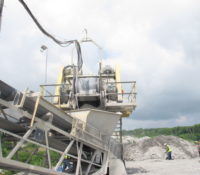
This is the second in a two-part blog series about conveying equipment that severely injured a worker at a mine. In case you missed it, click here to read Part 1 where I describe the incident and the mining equipment. In this part, I will discuss my engineering analysis of the incident and the machinery involved and share the conclusions I reached.

The injured miner was a front-end loader operator. He was not a maintenance worker. He simply responded to a radio request for help with the conveyor. Power to the electric conveyor motors was locked out, but none of the maintenance workers did anything to lock out or block the hazardous gravitational potential energy in the heavy load of stone on the belt. Read More

Conveyor Backstops: Sometimes One Isn’t Enough, Part 1

This is the first of a two-part blog series describing an incident involving conveying machinery that seriously injured a miner. Part 1 describes the machinery and the incident. In Part 2 I will summarize my engineering analysis of the incident and share the conclusions I reached.

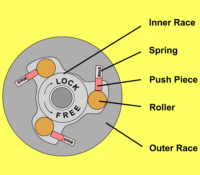
A loaded, inclined conveyor belt may contain hazardous levels of energy due to gravity. To protect workers, anti-reverse devices called backstops are installed on inclined conveyors to prevent unexpected downhill movement. The Conveyor Equipment Manufacturer’s Association (CEMA) defines a backstop as: Read More

Lack of HVAC System Design and Poor Installation Lead to Extreme Conditions

Author

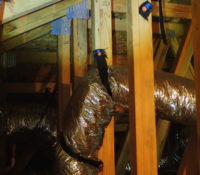
Construction defects can appear in many forms.  The building does not necessarily have to fall down. There are many types of construction defects, including roof leaks, water intrusion into walls, as well as Heating, Ventilation, and Air Conditioning (HVAC) defects.

One extreme example of this was an office complex I was called to for an investigation of the source of mold observed on the walls.  The occupants complained that they could not find a temperature setting on the thermostat where they could make the office comfortable. When I inspected the office, I couldn’t believe what I was seeing.  A band of black mold Read More

Industrial Equipment Failures and Construction Disputes

Author

At Warren, we frequently investigate losses involving industrial machinery.  Many of the losses involve workplace injuries, fires, or explosions; however, we also analyze industrial machinery and processes for other types of problems.  For example, we analyze failures of machinery or industrial processes to perform as expected or disputes that arise from the commercial supply and construction of such systems.  This can encompass a range of issues from failure to achieve required levels of product quality or production quantity, to matters concerning unclear specifications or contracts, Read More

Heavy Machinery Fires Caused by Hydraulic Hose Failures

Author

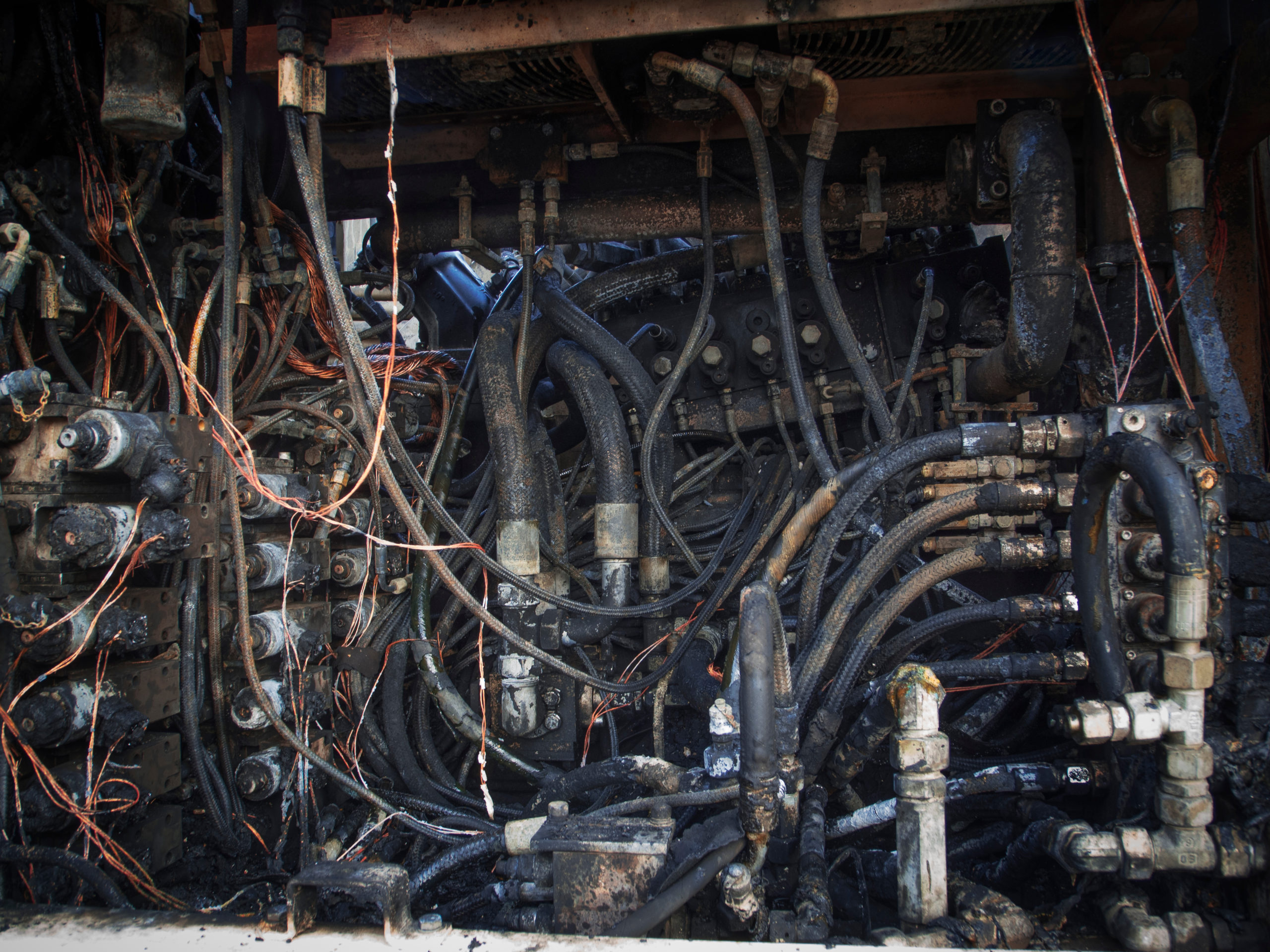
Heavy machinery fires are often caused by hydraulic hose failures.  Pressurized hydraulic fluid escaping from a failed hose assembly can be atomized into a fine spray that can be ignited by heated engine surfaces such as the engine exhaust or turbocharger.

Hydraulic hoses near the engine compartment of an excavator that burned.


Hydraulic hoses often fail due to age and wear, requiring regular inspection and replacement of hydraulic hoses to prevent failures. Hoses may also fail if they are misrouted.  Misrouting can lead to the hose being pinched or causing it to chafe against a sharp metal surface. Read More

Interpreting Industrial Incident Data – Lesson Learned

This is a case study about an incident I investigated involving a major upset in a distillation column.  This blog builds on the previous blogs about the Distributed Control System, DCS – Data is the Key.

Distillation is a method of separating mixtures of compounds with differing boiling points.  Uncle Bill with his still on the hill separates ethanol, that boils at 173°F, from water that boils at 212°F.  If the mixture is heated to above 173°F, but below 212°F, the ethanol will boil, the vapor will travel up out of the unit and then can be condensed and served over ice with an olive…   Any mixture of two or more chemicals with different boiling points can be separated in this way.  The distillation Read More

TVSS or SPD … Can I Buy a Vowel? Understanding Surge Protection and the Changing Requirements

Author

Surge Protective Devices (SPD), formerly known as Transient Voltage Surge Suppressors (TVSS) have been around for a long time.   The most recognized version is integrated into outlet strips and used to protect sensitive electronics from surges, or higher than expected voltages on the power line.  Early versions of these surge strips were known to have problems where internal components could overheat and cause a fire.  Thermal protection was added to the designs to greatly reduce the potential for a fire hazard.  Such an implementation in an outlet strip is considered a Type 3 SPD. Read More

The Condensate System – An Important Item in Routine HVAC Maintenance

Author

HVAC systems are almost everywhere in the United States now.  As a life-long resident of the humid south that grew up in a home without central air conditioning; I definitely appreciate the ability of a well-designed and maintained HVAC system to remove the oppressive summer humidity.

The very humidity that makes your clothes damp with sweat and hastened the invention of cooled leather seats in automobiles also has another route to create havoc…condensate.

In order for an HVAC or “air-conditioning system” to reduce the humidity in the air of your home or office it must first cool the air down to a point where the air can no longer keep the moisture in suspension as water vapor.  The moisture must condense… creating condensate.  This is what is happening when your cool beverage of choice “sweats” on the exterior of the container in the humid summer. Now that you have liquid water, as opposed to water vapor, this condensate must be directed out of your conditioned space to prevent water damage due to backed up or leaking condensate. Read More

Type ofLoss

Not sure what you're looking for?
Browse All

Select Loss Category