Forensic Engineers and Consultants

Archive: Fires & Explosions

P&ID’s, If You Please – Piping and Instrumentation Diagrams Explained

When investigating an industrial incident, one piece of information I always ask for is the relevant P&ID’s for the process.  P&ID stands for Piping and Instrumentation Diagram and is defined as “A schematic diagram of the relationship between instruments, controllers, piping, and system equipment.” A set of P&ID’s for an entire facility allows you to trace the entire manufacturing process from raw material unloading to finished product loadout, including utilities like steam, water, fuel, and air. That’s great information to have, but isn’t especially useful Read More
The Paths of Chemical Exposure

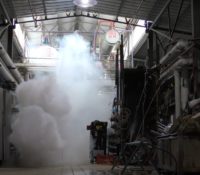
The Safety Hierarchy states that hazards should be mitigated first by engineering controls, secondly by guarding, and lastly by warning/training.  When the first two, engineering controls and guards, fail in a manufacturing setting, a chemical release could occur. A forensic chemical engineer can help determine the root cause of that failure. Read More

What You May Not Know About Using a Concrete Test Hammer

Author

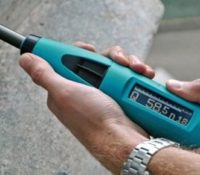
When assessing potential problems in concrete structures, consider a non-destructive test using the concrete test hammer, AKA “rebound hammer,” before investing a lot of time and money needlessly replacing or destructively testing the concrete structure.  The use of rebound hammer tests should be considered before you or your client decide to drill multiple core samples. Large areas of the concrete structure suspected of having potential strength problems can be tested quickly with a rebound hammer.  Analysis of those results can narrow down specific areas for more rigorous testing. Read More

The Demise of Insulation on Electrical Wiring

Author

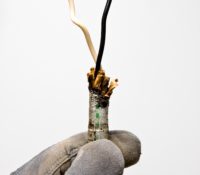
Unlike fine wines and some types of cheeses, not everything ages well.  Such is the case with the materials used as insulation of electrical wiring.  While the copper metal used as the conductor in many wire types will last virtually forever, the cladding used to protect and insulate the wire allowing electrons to flow to their final destination does not. Read More

Ammonia – The Good, The Bad, The Smelly… Part Two

Now that you know what ammonia is (see Part One here), how it behaves, and how to safely store it and work with it, let’s look at some areas in industry where it is used.

Anhydrous ammonia has a use in pollution control.  Industrial boilers and power plants burn coal or natural gas to make steam and/or electricity. When the fuel is burned using air as the oxygen source nitrogen gets exposed to the heat as well because air is 79% nitrogen.  The nitrogen gets oxidized and forms several compounds referred to as NOx (NO, NO2, NO3).  NOx compounds are harmful to Read More

Construction Techniques to Prevent Water Penetration at Windows

Author

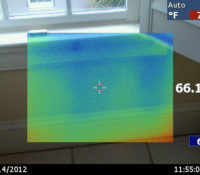
Windows, and their interface with the exterior walls, are an important part of a building’s envelope that resists the intrusion of water. Most builders take many precautions to protect a house from water damage. One of the most important factors in keeping the water out is the installation of window flashing, a thin material that prevents water from seeping in around a window. Read More

Ammonia

Ammonia – The Good, The Bad, The Smelly… Part One

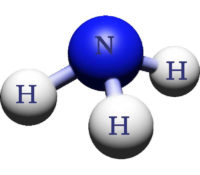
Ammonia is a compound consisting of one nitrogen atom and three hydrogen atoms and is denoted by the formula NH3. Its boiling point is -28°F at atmospheric pressure, so unless it is under pressure, it is gaseous at room temperatures. Therefore, pure ammonia is typically stored under pressure in a liquid form. Household ammonia is only 5-10% NH3, the remaining 90-95% is water. Ammonia is extremely soluble in water. It is often depicted  like this: Read More

The CE Mark and What Should It Mean to You? Part One

Author

Two little letters, CE.  Perhaps you have seen those two letters on a machine nameplate or some other equipment.  What is the meaning behind those two stylized letters and how does it drive the design of safer machinery?  Let’s take a closer look. Read More

Shedding Some Light on Fluorescent Light Fixture Fires

Author

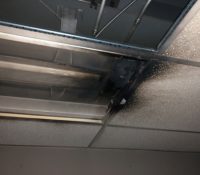
Lighting systems in buildings and other structures have undergone changes over the years.  Many of these changes have occurred as manufacturers have developed more efficient lighting methods.  Lighting loads can represent the largest category of electrical load in many buildings, thus improved lighting efficiency may significantly lower your power bill and can lengthen time between lamp changes. Read More

Distributed Control Systems…Data is the Key

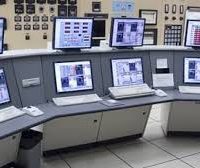
Wouldn’t it be great to have a built-in camera to let you see exactly what went wrong before an incident?  In many manufacturing instances there is, chemical plants especially.  The computer system that operates the plant is called a Distributed Control System (DCS) and it has the capacity to monitor thousands of process variables (flow rates, temperatures, pressures, levels, valve positions, pumps on/off) simultaneously. Read More

Type ofLoss

Not sure what you're looking for?
Browse All

Select Loss Category